Guides
Buffet vs. Plated vs. Food Stations
Buffet, plated, and food stations can all be great—your choice mainly changes your staffing, timing, how guests move through food, and your all-in cost per guest. Use this guide to pick the style that fits your headcount and budget.
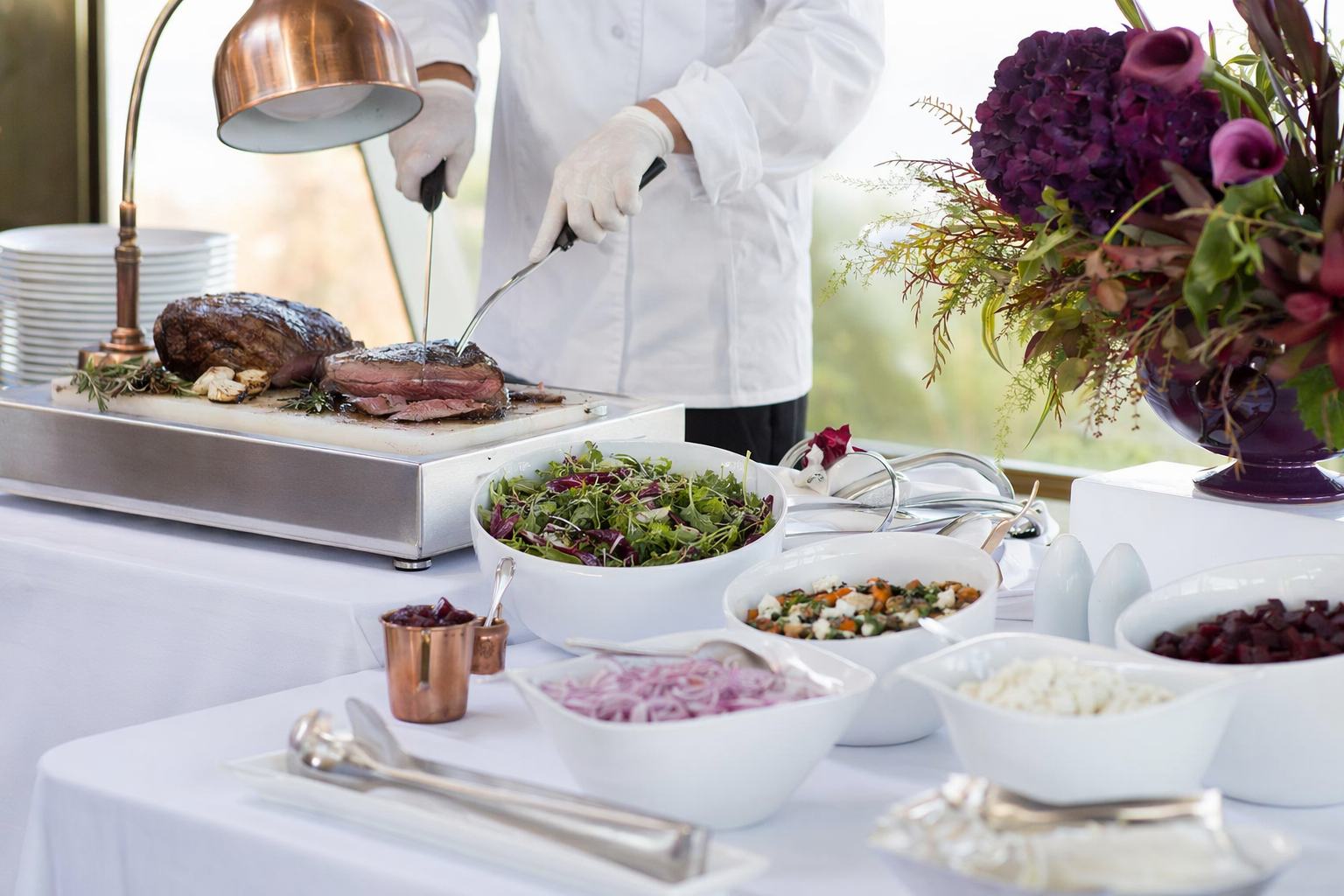
Quick answer: which style fits your event best?
If you want the most flexible lineup and usually lower all-in cost, go with a buffet.
If you want an “occasion” feel, consistent portions, and a more formal timeline, plated service is often the better match—especially for weddings and memorial receptions.
If you want variety without a full plated course plan, food stations are great for large groups and for “shareable” menus (tacos, Mediterranean bowls, carving, dessert bars). They can feel lively, interactive, and easier to customize for dietary needs.
No matter the style, the final invoice depends on what’s included (staffing, rentals, delivery/setup), not just the food.
Buffet: cost, staffing, timing, and the “feel”
Buffet is usually the simplest for hosts: guests choose what they want, and you can offer multiple options at once (within the caterer’s limits). It often works well for 30–300+ guests.
Cost per guest range (typical): about $18–$45 per person for food-only, depending on menu and service level. With full setup, staffing, and common extras, many hosts land closer to $30–$65+ all-in per guest.
What drives the price up: higher-end proteins and seafood, multiple carved/meat stations, dessert service, upgraded sides or appetizers, and anything requiring extra staff or equipment.
Staffing & timing: you’ll still need people to keep food fresh, manage service lines, and handle replenishment. Buffets can run slower if lines get long—so ask how they plan traffic flow for your headcount.
Plated: cost, pacing, and what makes it worth it
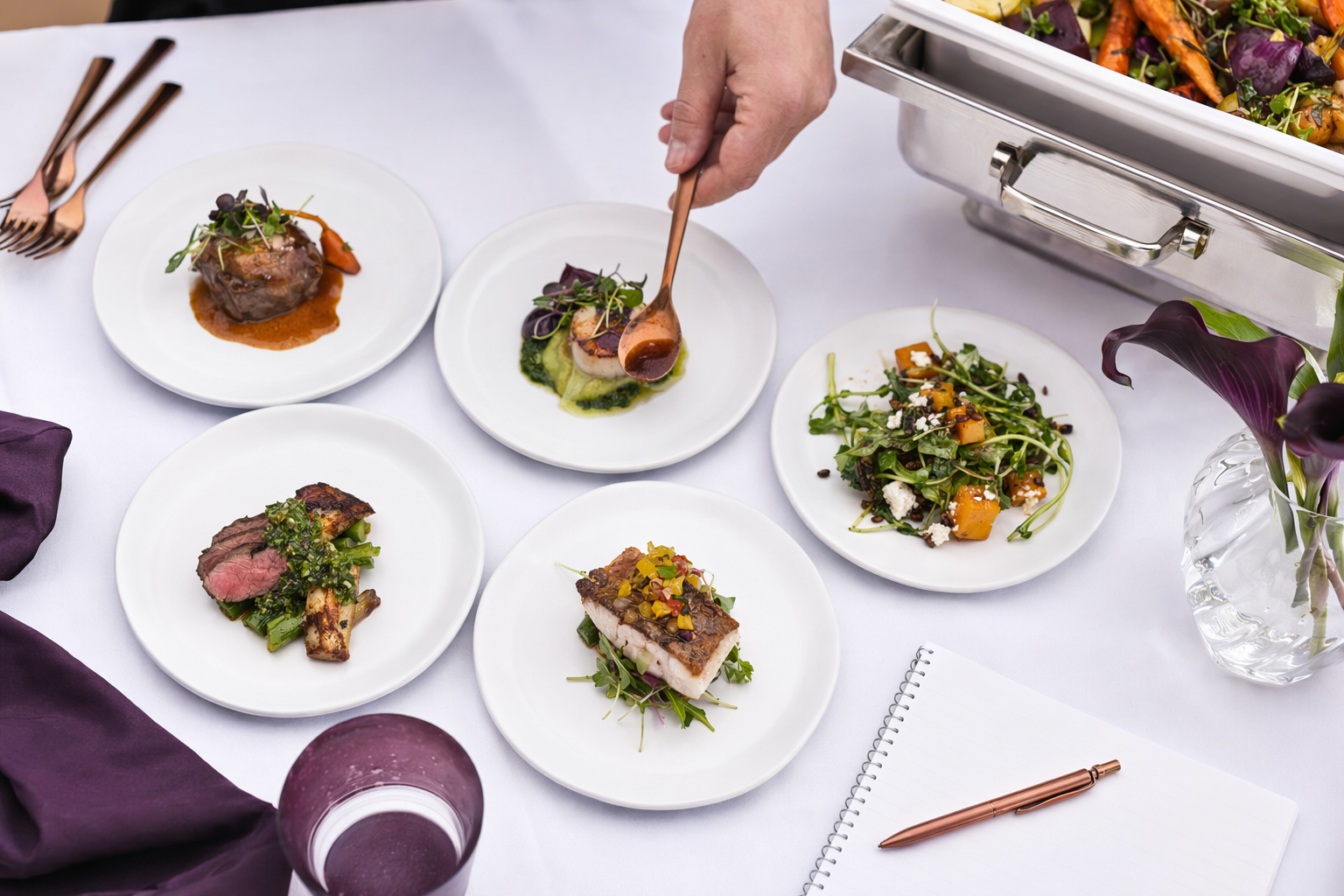
Plated service is the most “planned” option. The caterer serves pre-portioned plates in a set sequence (starter/entree/dessert). This is why plated meals can feel very formal and smooth—especially with speeches and a clear schedule.
Cost per guest range (typical): often $35–$70 per person for food-and-service. With staffing, rentals, and drinks (if included), many hosts see $55–$95+ all-in per guest.
What drives the price up: multiple menu courses, heavier staffing (because servers must bring plates to tables), premium menu items, and any added complexity like family-style rollups or special dietary plate counts.
Timing matters: plated service needs a reliable guest count and seating plan. Ask how they handle meal selections and last-minute changes. Also ask whether they charge extra if your event timeline shifts.
Food stations: variety without the full plated timeline
Food stations are a middle ground: guests walk to different stations and assemble plates. Stations are popular for cultural celebrations, parties with lots of guests, and events where you want “something for everyone.”
Cost per guest range (typical): about $22–$50 per person for food, depending on menu complexity and how many stations. With attendants, setup, and common event needs, many hosts see $35–$75+ all-in per guest.
What drives the price up: number of stations, live-action elements (like carving or wok cooking), premium toppings/sides, and staffing for each station (attendants keep items stocked, manage spills/cleaning, and maintain safe food holding).
Big difference vs. buffet: stations can feel more interactive, but they require space and traffic planning. If your venue is tight, stations may cause bottlenecks—ask what layout they recommend.
Costs aren’t just “food”: what to ask so you don’t get surprised
When hosts compare options, they often compare different things without realizing it. The all-in price can change a lot based on staffing, rentals, and event logistics—not the menu alone.
Before you choose a style, ask caterers to break out (and confirm in writing):
- Per-guest price and what it includes (food only vs. food + service)
- Service style details (buffet vs. attended buffet, plated with servers, stations with attendants)
- Staffing and server/bartender fees (how many staff and for how many hours)
- Delivery, setup, and breakdown
- Rentals (tables, linens, chafers, warmers, serving utensils, chairs needed for display)
- Food-and-beverage minimums (minimum total spend even if your guest count is lower)
- Service charge / gratuity and whether it’s included in the advertised per-guest number
- Overtime (when it starts and how it’s charged)
Also ask about timing:
- How they keep hot/cold food at safe temperatures during your service window
- When they arrive for setup
- Whether they charge extra for delays, early/late service, or schedule changes
If you’re using Tablefare to get matched, you’ll share your rough guest count, date, city/ZIP, and desired service style—then you can request clear, comparable line items from nearby caterers.
Fine print red flags (and how to stay in control)
A good catering quote is readable and specific. If it’s vague, it’s usually where surprises hide.
Watch for these red flags:
- “Per person” pricing with unclear inclusions (food only vs. full service)
- A service charge/gratuity that’s added later (or not mentioned at all)
- Rentals listed as “may be provided” instead of confirmed
- Delivery/setup charged separately without an amount
- Overtime rules that don’t match your event timeline
- Final-headcount deadlines that feel too tight (or not stated)
- Cancellation terms that change quickly or are hard to understand
To stay in control:
- Confirm your final headcount date and what happens if it changes
- Ask for the exact all-in cost per guest *and* the total estimate
- Request any menu substitutions and see whether they change price
- If you can, taste/sample where available—especially for key proteins and desserts
Remember: Tablefare is a FREE matching service. We don’t cook, serve, or set catering prices, so your chosen caterer’s contract and final invoice should guide the final decision.
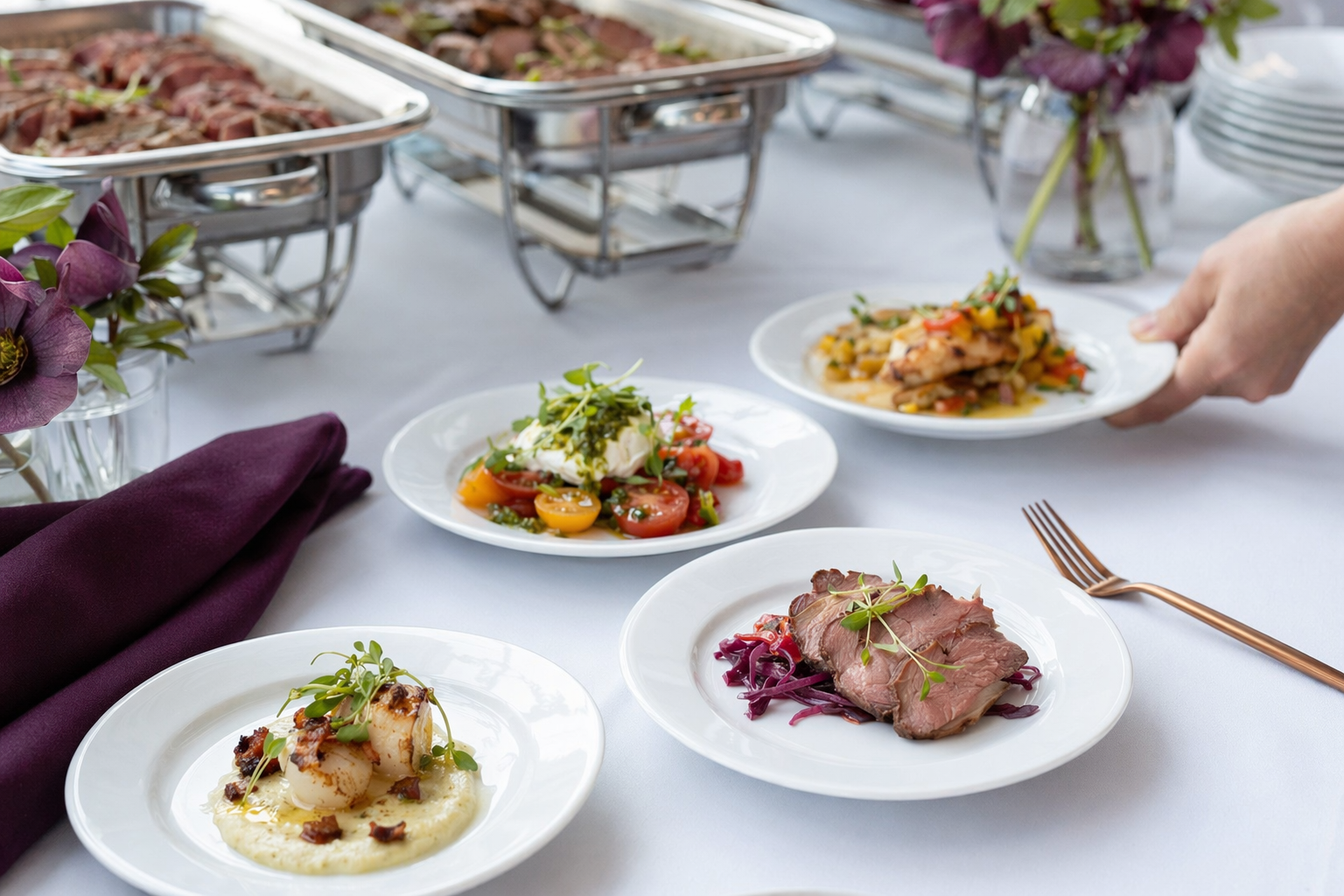
Pick buffet for flexible value, plated for a formal timeline, and stations for interactive variety—then compare all-in costs with exact inclusions (staffing, rentals, minimums, and gratuity), not just the food per guest.
Common questions
Is buffet usually cheaper than plated?
Often, yes—buffet tends to require fewer servers and can be more flexible for large groups. But the all-in difference depends on your menu, whether the buffet is attended, your drink plan, and what rentals/setup are included. Always compare the full invoice, not just the per-guest “food” number.
Can food stations work for dietary needs like halal, kosher, vegan, or gluten-free?
Yes, food stations can be great for dietary options because you can label ingredients and dedicate stations or toppings. Ask how they prevent cross-contact (especially for allergy-aware meals) and whether special diets have an added cost. Get the labeling and ingredient list in writing when possible.
What guest count is best for each style?
There isn’t a strict rule, but generally: buffet and stations are popular across small to large counts, while plated is often chosen for more formal events and can work best when you can plan reliably around meal selections. Your venue space and schedule matter just as much as headcount.
What should I ask so I can compare quotes fairly?
Ask for line-item inclusions: food vs. service, staffing hours, rentals, delivery/setup, overtime, gratuity/service charge, and any food-and-beverage minimums. Also confirm the final-headcount deadline and how last-minute changes are handled.
Should I include drinks in my catering plan?
Drinks can change the total cost a lot, especially if you add cocktails, wine, beer, or bartending staffing. Ask how the caterer charges for bartender/service fees, any bar setup/rentals, and whether there’s a food-and-beverage minimum.