Quick answers
Can caterers do halal or kosher menus?
Yes—many caterers can do halal and/or kosher meals, but they usually need clear requirements and separate handling. Tablefare is free to use to get matched with caterers near you to quote and compare.
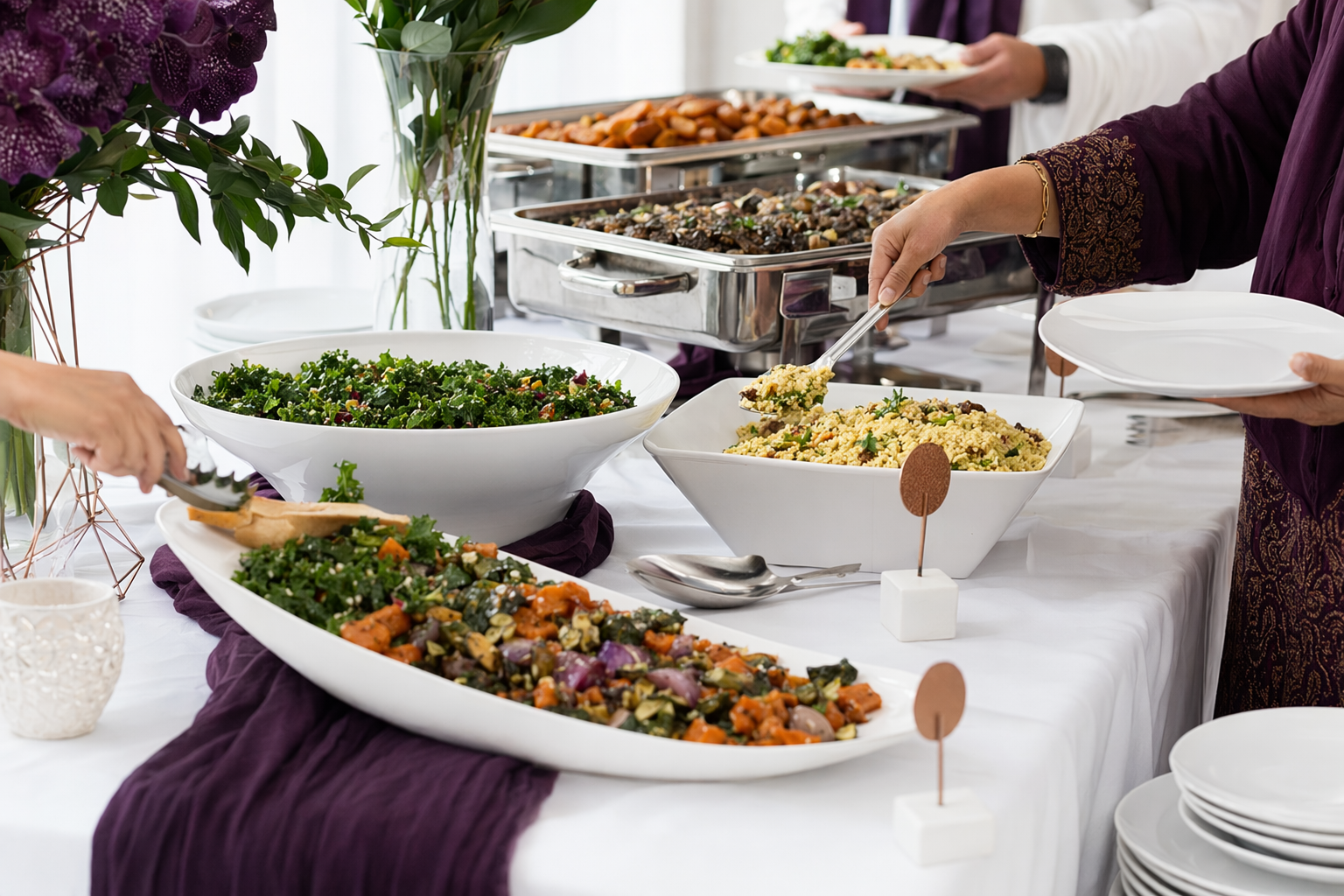
Quick answer: can you get halal or kosher catering?
Most caterers can prepare halal food, and some can provide kosher catering—but it depends on the caterer, your venue, and how strict you want to be.
Halal catering usually means the meats are halal and the food is prepared to avoid non-halal ingredients. Kosher catering is stricter and often requires kosher-certified ingredients and specific kitchen processes (sometimes a kosher kitchen or certification).
If you’re not sure how to explain your needs, that’s okay. Start with what you want (halal, kosher, vegetarian option, allergy-aware), your date, your city/ZIP, and your guest count. You can then ask the caterer to confirm exactly what they will do in writing.
You can get started by using get matched free with catering options near you.
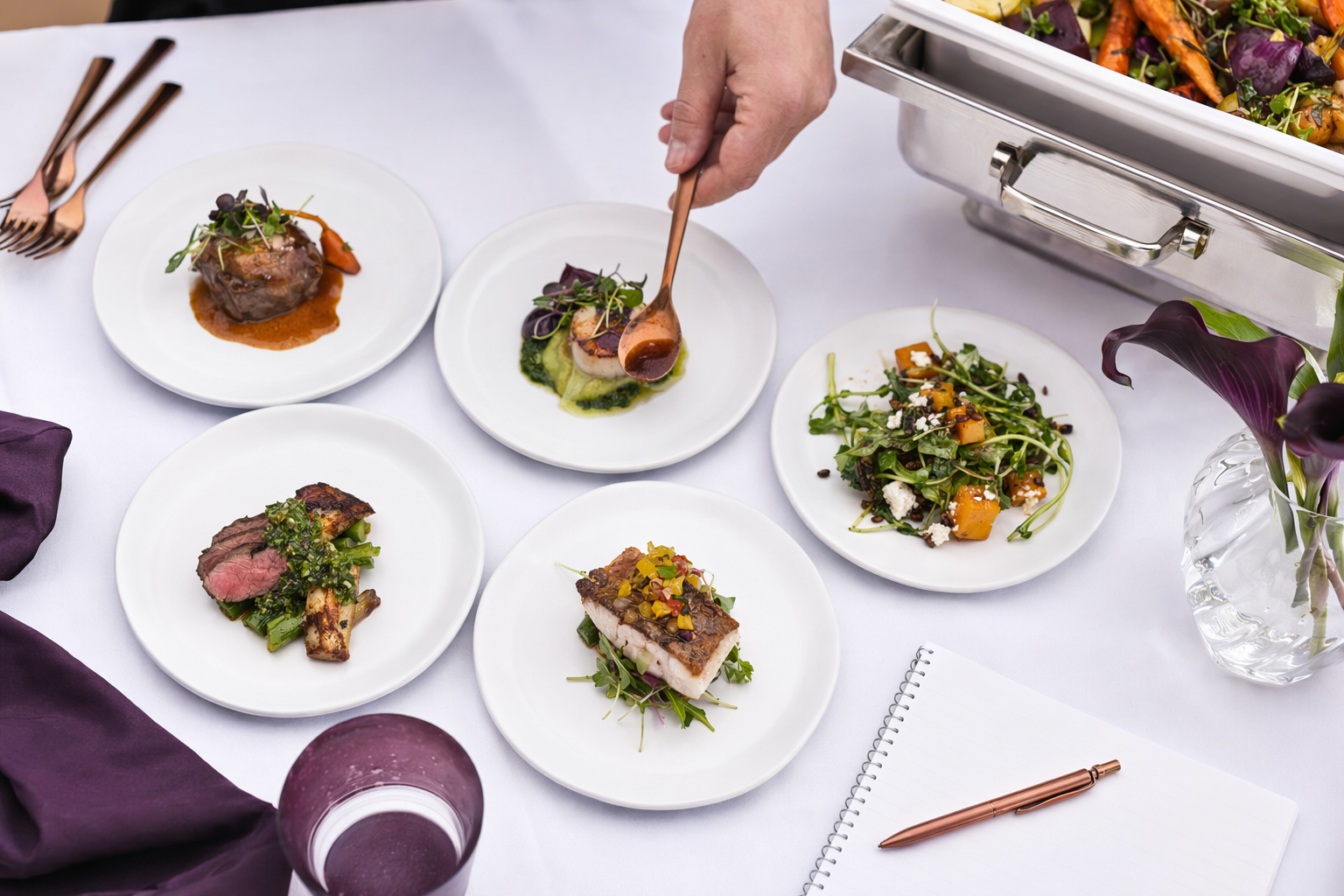
What to ask so you get the right answer (not a guess)
When you ask about halal or kosher, the important part is “how exactly will you do it?” A quick phone call is helpful, but always ask for written confirmation in the contract.
Use these questions to keep everyone on the same page:
- For halal: Are the meats halal-certified? What certifications (if any) do you use?
- For kosher: Are you kosher-certified? Who provides the certification (name on the certificate)?
- Kitchen process: Will the food be prepared in a dedicated area or with dedicated utensils?
- Cross-contact: How do you prevent mixing with non-halal or non-kosher items?
- Ingredients: Do you use any non-kosher alcohol, gelatin, or non-permitted additives?
- Serving: Do you provide separate trays/serving utensils for kosher/halal guests?
- Labels: Will dishes be clearly labeled so guests know what’s what?
- Substitutions: What happens if a required item is unavailable—do you need approval in writing?
If you’re planning from another city or country, it’s especially worth asking for photos of the setup and packaging, plus the exact product details they’ll use.
Cost reality: what halal/kosher catering usually changes
Halal and kosher meals can cost more than a standard menu, but the amount varies a lot. The big reasons are ingredient certification, smaller batch purchasing, extra handling, and sometimes special staffing or equipment.
Typical per-guest food-and-service ranges (not quotes) can look like:
- Halal catering (common menus, similar to “regular” catering): about $25–$70 per guest for food, then possibly additional service charges depending on the style and venue.
- Kosher catering (varies widely by strictness and certification): about $35–$120+ per guest for food, with additional fees often depending on whether you need full-service, staffed stations, or special handling.
These are broad ranges, not guarantees. Your all-in cost can go up or down based on:
- Menu complexity: multiple proteins, premium cuts, seafood, or custom sauces cost more.
- Service style: drop-off is usually cheaper than full-service with staff.
- Guest count: larger events can lower the per-guest food cost, but staffing and rentals can still rise.
- Day and season: weekends and holidays often cost more.
- What’s included: rentals, delivery, setup, staffing, and bartending can add to the final invoice.
For more on budgeting, see catering costs and what affects price.
Service charge, gratuity, and fine print to watch for
Even if the food sounds like a “per-person” price, the final invoice may include other line items. Before you choose a caterer, ask for an itemized estimate and confirm what’s included.
Common fine print items to look for:
- Per-guest price (for the food)
- Food-and-beverage minimum (especially for bars or full-service)
- Service charge or gratuity (sometimes a percentage, sometimes a fixed amount)
- Staffing fees (servers, kitchen staff) and how many staff are included
- Bartender fees (if alcohol is served)
- Rentals (tables, linens, chafers, serving utensils, plates)
- Delivery, setup, and breakdown
- Cake-cutting fees or corkage (if you bring a cake or wine/spirits)
- Overtime charges if service runs past the planned time
- Deposits, cancellation terms, and final-headcount deadlines
Red flags (worth taking seriously):
- They can’t clearly explain what makes it halal or kosher.
- They only say “we can do that” but don’t provide certification details (for kosher) or handling details.
- They won’t put the plan in writing or won’t confirm utensil/cross-contact safeguards.
- The contract is vague about final headcount or includes unclear overtime/rental fees.
For anything important—certification, separate handling, and labeling—ask them to confirm it in the contract, then review the final invoice before paying a deposit or balance.
How to plan your table when you have mixed needs
Many hosts have guests with different needs (halal, kosher, vegetarian, gluten-free, allergy-aware). The best plan is to label clearly and simplify choices so your kitchen can manage safely.
Practical ideas that work well:
- Build one main menu that follows halal rules, then offer a separate certified kosher option if needed.
- If both groups are attending, ask whether the caterer can maintain separate trays/utensils and avoid cross-contact.
- For allergies, ask for an allergy-aware process (ingredient lists, separate prep surfaces, and clear labeling).
- Consider a “food stations vs. plated” decision based on how many different dishes you’re offering.
If you want, you can start the planning conversation with Tablefare and tell us your needs and your city. It’s free, and you’ll be matched with caterers who can at least talk through your halal/kosher requirements. Start with get matched free.
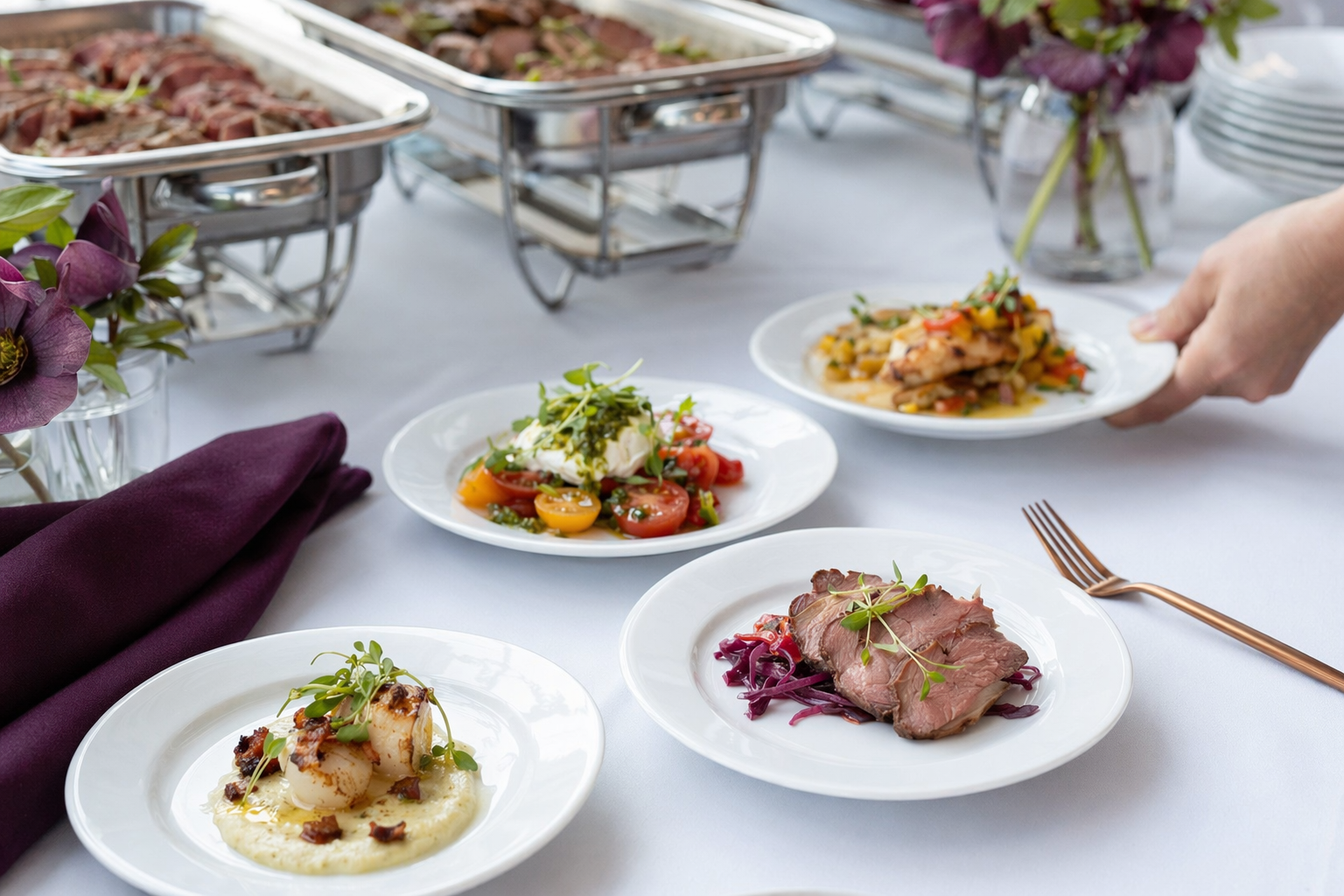
Yes, halal and some kosher catering are available—ask about certification and cross-contact safeguards in writing, then compare all-in per-guest costs using Tablefare (free for you).
Common questions
What’s the difference between halal and kosher catering?
Halal focuses on permitted ingredients and halal slaughter practices, plus handling to avoid non-halal cross-contact. Kosher is stricter, typically requiring kosher-certified ingredients and specific kitchen and serving practices; some events require kosher certification and/or dedicated handling.
Can one caterer serve both halal and kosher guests?
Sometimes, yes—but it depends on the caterer’s kitchen setup, certifications, and cross-contact controls. Ask how they prevent mixing and whether they can provide separate trays, utensils, and labeling in writing.
Do kosher menus always require a certificate?
Often they do, especially if your guests follow kosher rules strictly. Ask the caterer to confirm whether they are kosher-certified and to share the certification details they will follow for your event.
Will halal/kosher catering cost more per guest?
Often it can, mainly due to certification requirements, specialized ingredients, and extra handling. Real costs vary by menu, guest count, service style, and what’s included—so ask for an itemized quote and compare the all-in per-guest total.