Quick answers
How much food should I order per person?
A simple rule: order enough so guests can eat comfortably—then plan for seconds and leftovers without wasting money. Here’s how to estimate portions per person and how it connects to the real all-in catering costs.
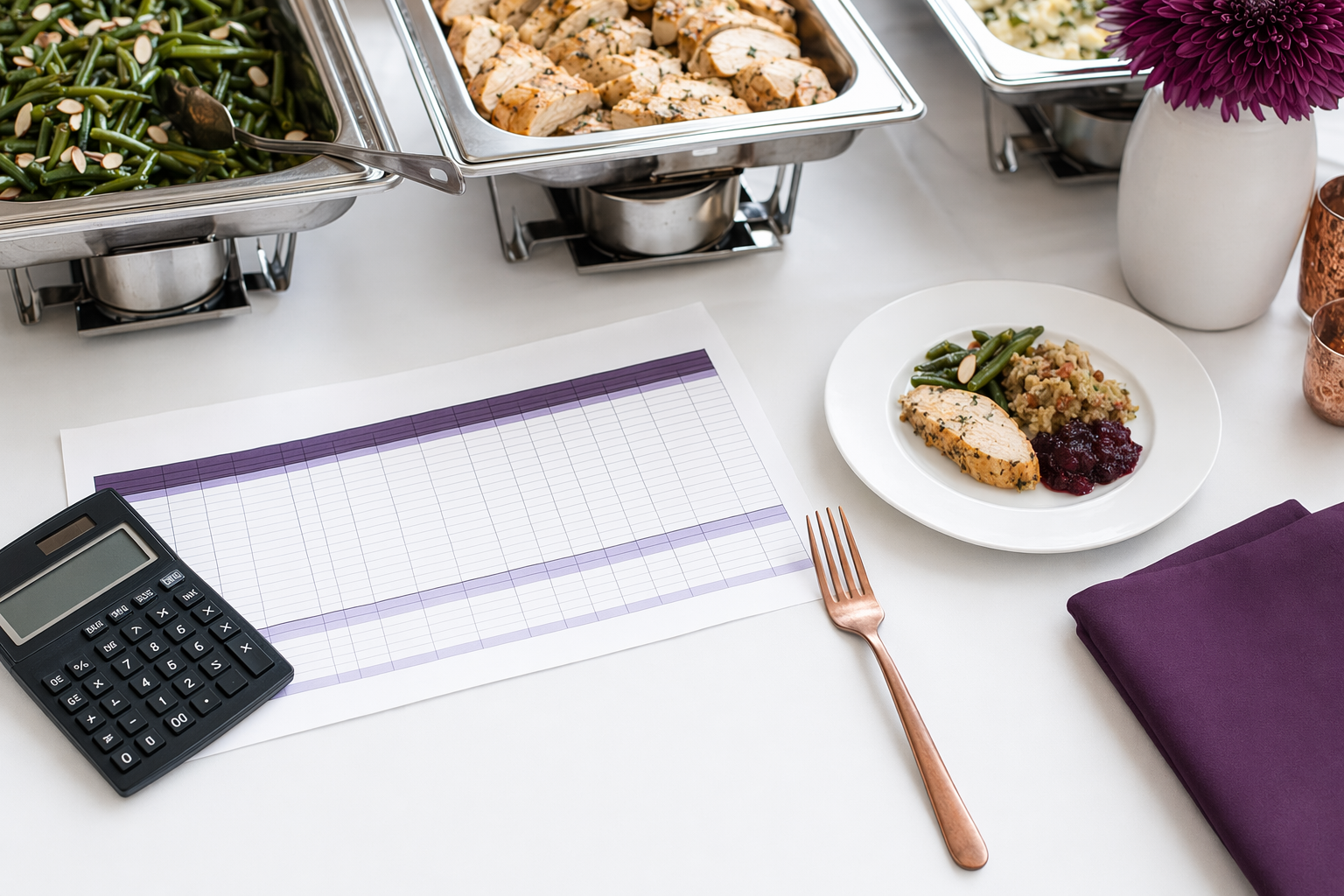
Quick answer: how much food should you order per person?
Most event hosts aim for about 1.0–1.5 “meals worth” of food per person, depending on whether it’s a light gathering or a full meal.
Use this as a starting point, then adjust for your menu and service style:
- Drop-off (guests serve themselves): plan closer to the higher end if the food is portioned (like sandwiches) and people tend to take what looks good.
- Full-service (staff plated or served): you can often plan slightly lower than drop-off because portions are controlled.
- Stations (build-your-own): plan around the middle, because people may sample multiple items.
A helpful way to think about it: you’re not just feeding “one plate”—you’re feeding the moment guests arrive and decide whether to eat now or later. The more varied the menu, the more guests snack, so you’ll likely want a bit more overall.
- If you tell us your event type, guest count, service style, and cuisine, we can help you compare caterers—free—so you can feel confident before you order.
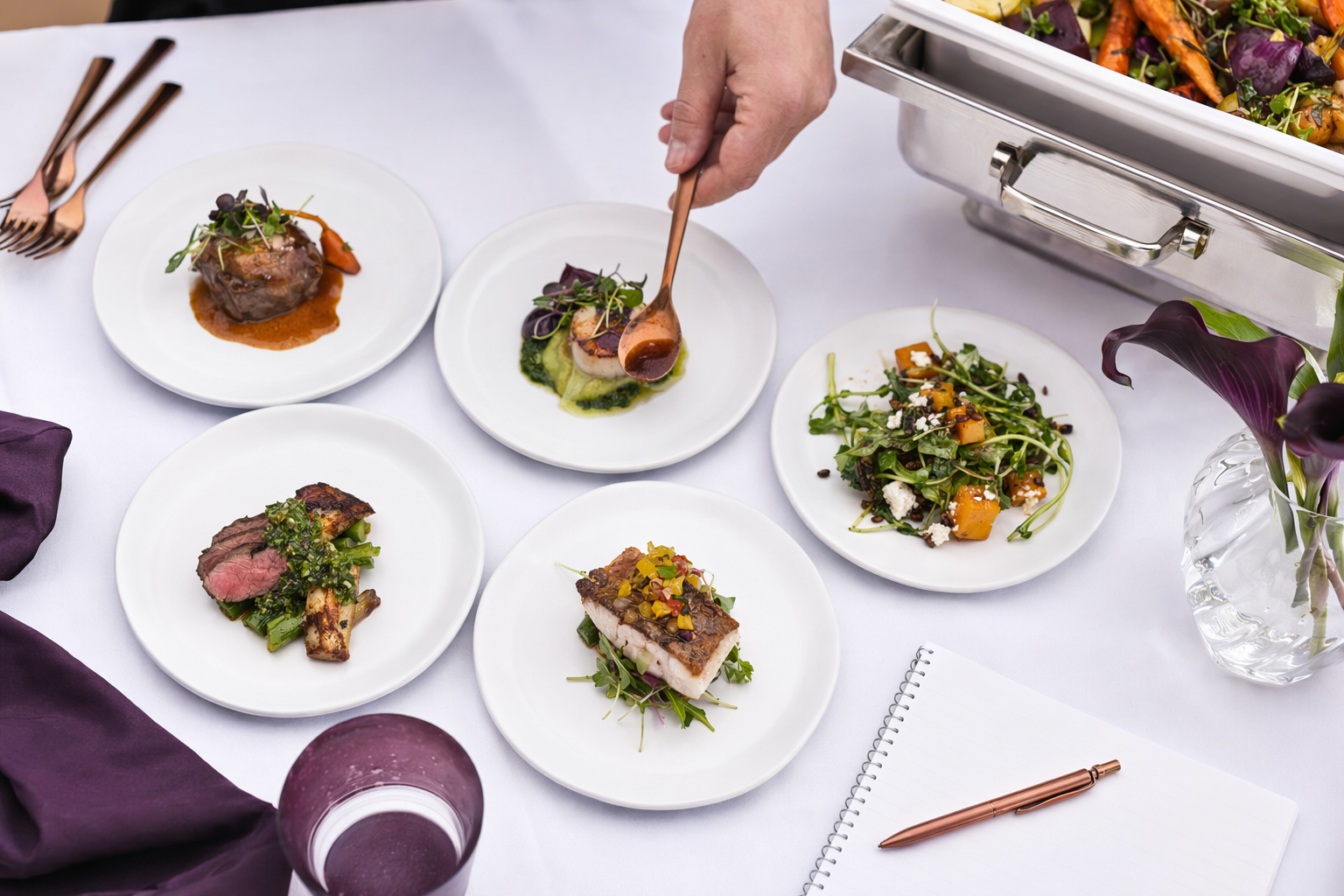
Portion guide by event type (start here, then fine-tune)
These are practical starting ranges. Exact amounts vary by cuisine (rice/stews vs. meat-heavy menus), guest appetite, and whether you’re also offering snacks, drinks, cake, or late-night bites.
1) Light reception / appetizers (no “main meal”)
- Finger foods: about 6–10 pieces per person (or enough for ~0.5 meal)
- If you have only 1–2 items, lean closer to the higher end so no one leaves hungry
2) Drop-off tacos / casual buffet (guests expect food to be the point)
- Plan roughly 1 full entrée-style serving per person, plus a little extra if people will go back for seconds
- If you’re offering chips + salsa and multiple toppings, you can sometimes count that toward the “meal,” but don’t assume it replaces the main
3) Full meal (lunch or dinner)
- Plan enough for ~1.0–1.5 entrée servings per person
- If you’re also doing salad + bread + dessert, the entrée portion can be smaller, but total food quantity usually stays in that “1.0–1.5 meal” mindset
4) Late-night / after-hours snacks
- Plan ~0.3–0.7 of a meal depending on what’s already been served earlier
- If guests are coming straight from dinner plans, you can go lighter; if it’s their only food, go heavier
If you’re not sure, a good middle path is: choose your “main” items first (entrees), then add sides in a way that makes sense for the table—don’t just stack calories without a plan.
- When in doubt, ask the caterer how they calculate food amounts and whether their estimate includes standard extras (like serving utensils, warming trays, and refill expectations).
What drives your food amount up or down?
Your per-person estimate is only half the story—your final invoice is usually the other half. Food quantity, service style, and inclusions are what move both the portions and the price.
Here are the biggest cost (and portion) drivers:
- Menu style: heavier proteins, seafood, or multi-course meals usually require more per person (and more expensive ingredients).
- Service style:
- Drop-off can be efficient for simple menus, but people may take more if food isn’t portion-controlled.
- Food stations often lead to sampling, so you may want slightly more variety or higher quantities.
- Plated/full-service often includes staffing and controlled portions.
- Guest count: larger events often cost more overall, but the per-guest price can sometimes stabilize if you’re booking a full team and standard packages.
- Day and season: weekends, holidays, and peak seasons often cost more.
- What’s included: some quotes include rentals, setup, delivery, warming, serving staff, and cleanup; others charge those separately.
- Dietary needs and special requests: halal/kosher, allergy-aware prep, and custom vegetarian/vegan menus can affect both planning and cost.
Even if you nail portions, an unclear scope is where budgets get surprises. That’s why it’s worth asking what each per-person figure includes—especially service charge/gratuity, staffing, rentals, and any beverage fees—before you sign anything.
- Portions and pricing are connected: if you want a “wow” spread with lots of variety, plan a higher food total per person and confirm how that impacts the all-in cost.
What to ask caterers (so you don’t under-order or overpay)
Before you order food, ask questions that clarify both quantity and the invoice details. You stay in control, and you can compare apples-to-apples.
Ask about food quantity:
- “How many servings per person are you planning for this menu?”
- “Do your estimates assume seconds/refills?”
- “If we add/replace an item (for example, a second entrée or extra sides), how does that change the per-person amount?”
- “How do you handle leftovers—packaging included or not?”
Ask about the full price:
- “What is the all-in per-person cost for food AND beverage (if applicable)?”
- “Is there a food-and-beverage minimum?”
- “What’s the service charge/gratuity and is it mandatory?”
- “Are delivery, setup, and breakdown included?”
- “Do you provide rentals (tables/chafers/linens) or are those separate?”
- “Do you have staffing requirements (servers, bartenders) and what are their fees?”
- “Are there overtime fees if we run late?”
Confirm in writing:
- Your final guest count deadline
- Any deposit requirements
- Cancellation policy
- The exact date, menu, and inclusions
Tip: Don’t just look for a low per-person number. Ask for the full breakdown so you can compare the real “all-in” cost.
- If you want help comparing options, you can [get matched free with caterers near you](/get-matched/)—Tablefare doesn’t cook or quote prices, we just help you reach caterers for bids.
Typical all-in per-person cost ranges (and why they vary)
Costs vary a lot by city, season, and what’s included, but these general ranges can help you sanity-check budgets. Remember: ranges are not quotes.
Common starting points (all-in can include service charge/gratuity depending on the caterer):
- Drop-off / simple buffet: often around $20–$45 per person for food only, with delivery/setup sometimes added
- Food stations / fuller variety: often around $30–$70+ per person depending on menu and staffing needs
- Plated dinners / full-service: often around $60–$120+ per person when staffing, rentals, and service are included
What commonly pushes costs higher:
- Higher-end proteins or seafood
- More courses (salad + entrée + sides + dessert)
- Full staffing (servers, bartenders) and premium service
- Rentals and equipment (linens, chafers, extra tables)
- Beverage service (especially alcohol)
- Rush timing, weekends/holidays, or short-notice events
What can lower cost:
- Fewer menu items with smart portion planning
- Drop-off service with clear delivery/setup expectations
- Choosing a lighter but satisfying dessert approach
If you’re budgeting, the key is to compare the all-in cost per person—not just the food line. Ask exactly what’s included and read the final invoice before paying a deposit or signing.
- For a deeper look at how budgets get built, see our [catering cost basics](/costs/) and then plan your food accordingly.
Red flags (so you don’t get surprised after you order)
A good caterer should be able to explain how they estimate servings and what’s included. Be extra cautious if you see:
- “Per-person” numbers with no clarity on what’s included (food only vs. food + service + rentals)
- No mention of food-and-beverage minimums, delivery/setup, or mandatory gratuity
- Unclear staffing: who serves, who sets up, who cleans up?
- Vague cancellation terms or missing final-headcount deadlines
- Changes after signing without a clear written amendment
How to protect your budget (without stressing):
- Ask for an itemized invoice or written proposal breakdown.
- Confirm the exact date, guest count, menu items, and service style.
- Get the price in writing and double-check the all-in per-person cost.
If you’re planning from out of town or reading in a language other than English, it’s okay to ask caterers for the details in writing in the clearest way they can. You deserve to feel confident before paying.
- If you haven’t found caterers yet, start with [getting matched free with caterers near you](/get-matched/).
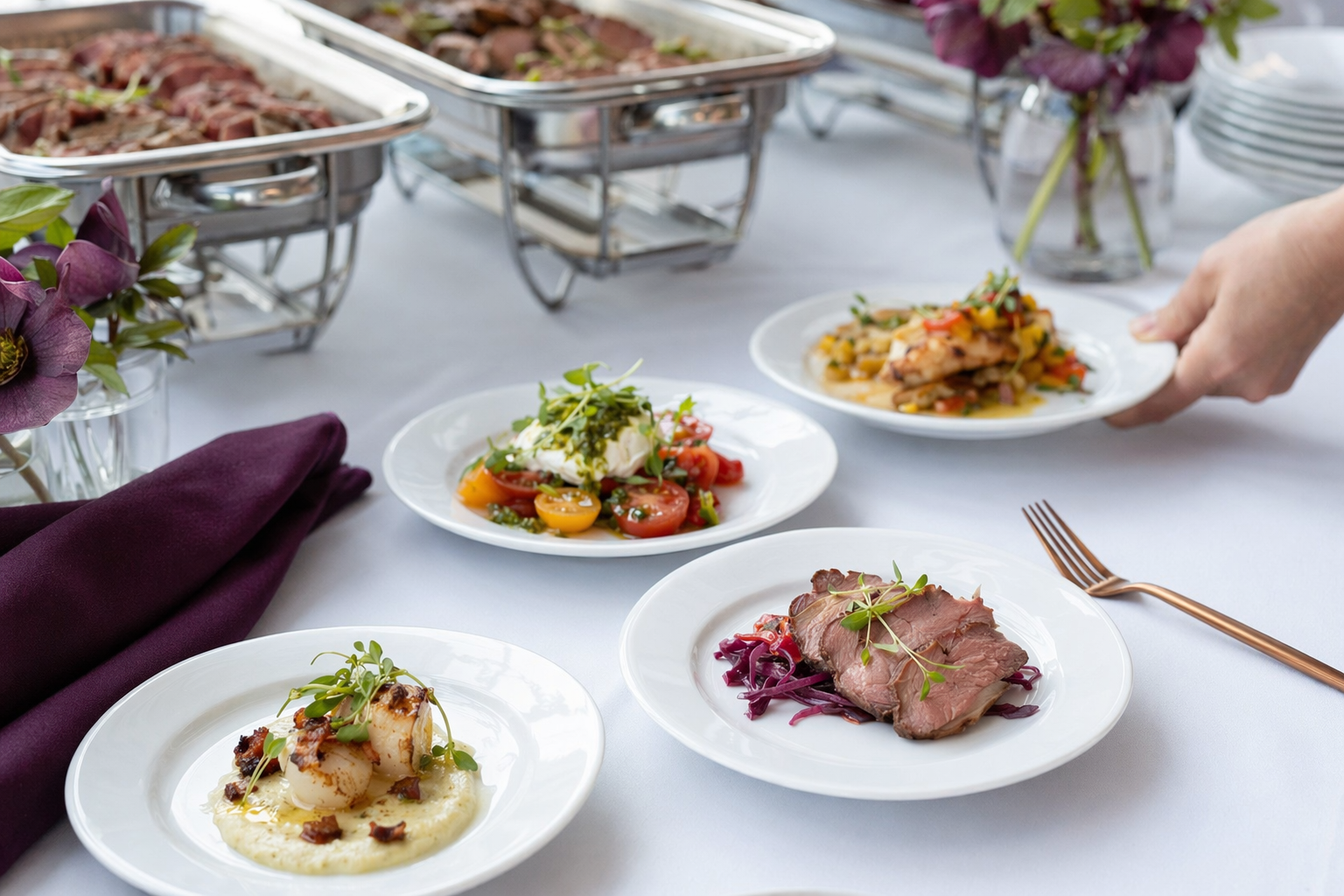
Plan about 1.0–1.5 meals worth of food per person, then confirm servings, refills, and all-in inclusions (delivery, staff, rentals, gratuity, minimums) so you don’t under-order or get surprised.
Common questions
What if I want leftovers—should I order more per person?
Sometimes, yes—but not always. Leftovers depend on the menu, portioning style, and whether guests take seconds. A practical approach is to order your “comfortable meal” amount first, then ask whether your caterer can pack leftovers (and whether extra food is priced by quantity).
How much food should I order for kids vs. adults?
Common practice is to count kids differently based on age and appetite, but caterers vary. Tell the caterer your approximate number of children by age range, and ask how they convert that into adult equivalents for their serving plan.
Do I need to worry about beverages when estimating food per person?
Beverages can change the overall cost and guest behavior (more snacking, slower meals, or longer stays), but food quantities shouldn’t be assumed from drink choices. Ask whether beverage is included, whether there’s a beverage minimum, and how refills or bar staffing are handled.
Is it better to order more food or risk running out?
Running out feels worse to guests, but too much can waste money. Aim for a realistic “1.0–1.5 meals worth” mindset, then choose an estimate that matches your service style (stations vs. plated vs. drop-off). If you’re near the tipping point, ask the caterer how often their events run low and what typical refill behavior looks like.
Can Tablefare give me exact servings or a firm price?
Tablefare doesn’t cook or provide catering quotes. We can help you get matched with caterers who can confirm servings and provide itemized proposals based on your menu, guest count, and date.