Quick answers
What's the cheapest way to cater an event?
The cheapest way to cater is usually a simple, buffet-style or drop-off meal with fewer “extras” and clear limits on service time. Tablefare helps you compare caterers near you for free—so you can pick the best all-in price.
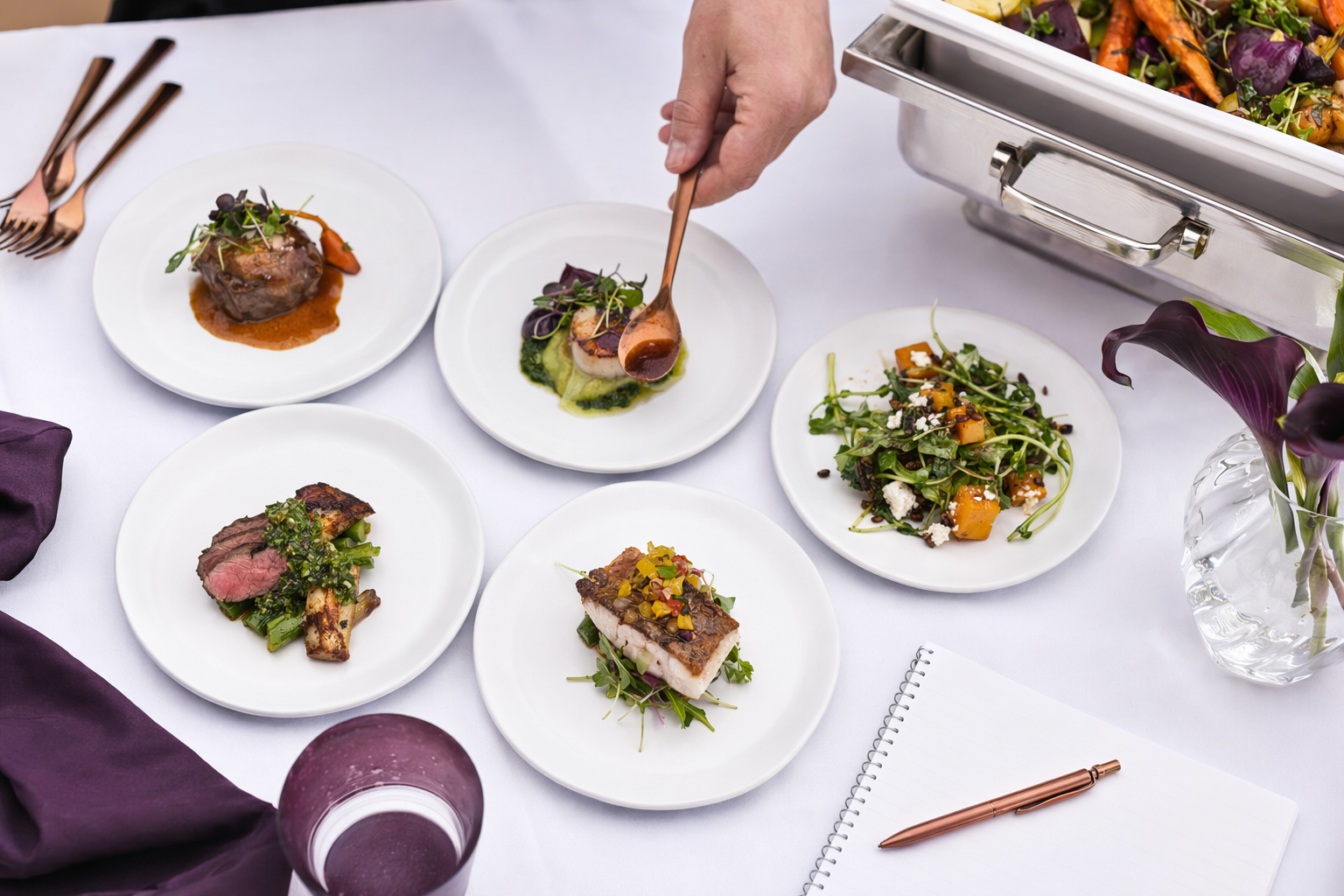
Answer first: the lowest-cost catering usually means fewer choices + less service
If your goal is “cheapest,” start with a menu that’s easy to produce at scale and a service style that doesn’t require lots of staff.
In most cities, the cheapest options are:
- Drop-off catering (you pick up or the caterer delivers, and you serve yourselves)
- Simple buffet/food stations (guests serve themselves, usually less staffing than plated)
- Limited-course menus (one main + one or two sides, fewer add-ons)
Plated service, custom desserts, premium staffing, and long service windows almost always raise the all-in cost.
- Typical approach: one straightforward main + a couple sides, served buffet-style or as a drop-off.
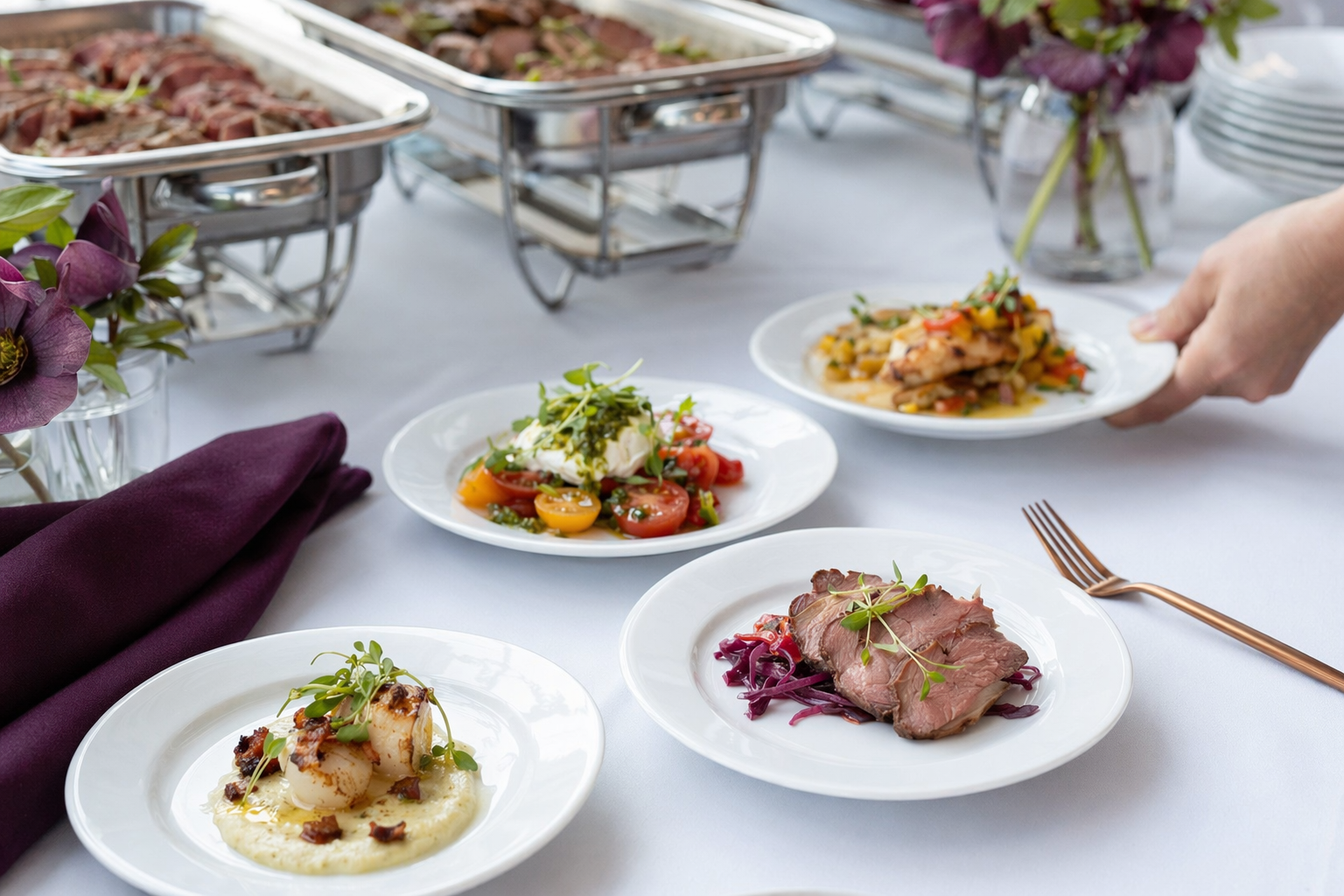
Real cost ranges (what you’ll pay depends on your city, menu, and what’s included)
There’s no single “cheap” price because catering costs change based on your menu, guest count, day/season, and whether you’re paying for staffing, rentals, delivery, setup, and beverages. Any price you see in conversation should be confirmed in writing as an all-in per-guest number.
That said, here are honest planning ranges people commonly see in the US:
- Drop-off (food only or minimal setup): roughly $10–$25 per guest
- Drop-off + disposable/simpler service basics: roughly $15–$30 per guest
- Buffet (main + sides, with attendants often included for setup/service): roughly $18–$45 per guest
- Plated service: often roughly $35–$75+ per guest (can be higher with premium proteins, staffing, and rentals)
Why this varies: a caterer’s ingredient costs (especially meat and seafood), labor hours, required rentals, beverage handling, and how much “day-of work” they’re doing all change the final invoice.
- Ranges are planning estimates—not quotes—and the final price comes from the caterer’s contract and final headcount.
What drives the price up (so you can control it)
To keep costs down, focus on the hidden drivers that often surprise hosts.
Common “price movers” include:
- Menu choices: premium proteins, multiple entrées, lots of fresh seafood, and elaborate sauces cost more
- Quantity and guest count: smaller events can cost more per guest because fixed labor and setup still happen
- Service style: plated usually needs more staff and more labor time than drop-off or buffet
- Staffing duration: longer “hot holding” times, live stations, or late service increase labor
- Day and season: weekends, holidays, peak months, and bad-weather days can raise pricing
- City and travel: delivery distance, travel fees, and minimums vary
- What’s included: delivery, setup, chafing/hot boxes, plates/utensils, and staffing may be included or may be extra
Also watch for minimums. Many caterers have a food-and-beverage minimum (even if your guest count is small). That minimum is often what makes a “cheap per-guest” idea end up feeling expensive in the final invoice.
- Cheapest goal = simpler menu + shorter service window + self-serve style + clear “all-in” inclusions.
How to get the lowest price without getting low quality
You can be budget-smart and still get great food. The trick is to ask for “apples-to-apples” comparisons so you’re not accidentally comparing different inclusions.
Use these questions when you request quotes (or when caterers reply after you’re matched):
1. What is the all-in price per guest for my menu and my service style?
2. Is delivery included? Setup included? Chafing or hot-holding included?
3. Are staffing and service charge/gratuity included—or added on top?
4. Is there a food-and-beverage minimum? What happens if my guest count is under it?
5. What’s the final headcount deadline?
6. Are rentals included (tables, linens, serving utensils) or are they separate?
7. What’s the cost for extra guests after the deadline?
8. If we bring our own cake (or drinks), are there cake-cutting or corkage fees?
A red flag: “cheap” pricing that excludes basic things like utensils, delivery, setup, staffing, or beverages. Another red flag: unclear wording about minimums and what counts toward them. If it’s not spelled out, ask until it is.
- Ask for line-item clarity: what’s included vs added, and what happens with headcount changes.
Fine print to watch (the money hides in these lines)
Most surprise bills come from add-ons and timing rules—not from the food itself.
When you review an invoice or contract, look for:
- Service charge and/or gratuity (sometimes added automatically)
- Staffing fees (especially for attendants, bartenders, or additional setup)
- Rentals (tables, linens, chairs, serving stations)
- Delivery and setup fees
- Cake-cutting fee and corkage (if applicable)
- Overtime charges if the event runs longer than the agreed time
- Deposit amount and what it covers
- Final headcount deadline and how late changes affect price
- Cancellation or rescheduling terms
Important: Tablefare is a FREE matching service—we don’t cook, serve, or set catering prices, and we can’t guarantee any specific booking or final cost. You stay in control: confirm the price per guest and date in writing, and read the full contract and final invoice before paying a deposit.
- Tip: compare caterers by “all-in per guest” for the same service style and inclusions—not just the base food number.
How to find the cheapest option for your event (free matching, then compare all-in)
The fastest way to save money is to compare a few realistic options near you—then choose the one with the best all-in value for your table.
Tablefare can help you get matched with caterers near your event for free. You provide contact + event intent only (your event type, city/ZIP, rough date, rough guest count, preferred service style, and cuisine). Caterers then respond with options they can actually do.
To get the most cost-effective results, consider starting with:
- Drop-off or buffet for self-serve
- One main entrée + two sides
- A clear service time window (for example: 2–3 hours)
- “We need disposable + setup” if that’s what you want (or “no rentals” if you already have them)
When you’re ready, you can get matched. For a broader overview of cost factors, see catering costs, and for more planning help visit guides.
- If you’re flexible on menu and service style, you’ll usually see more low-cost options.
The cheapest catering is usually a simple drop-off or self-serve buffet with fewer extras—then compare caterers by the all-in per-guest price (including delivery, setup, service charge, rentals, and minimums).
Common questions
Is drop-off catering always cheaper than buffet?
Often, yes—drop-off usually needs less staff time than a buffet with attendants. But not always: some caterers include setup, chafing, utensils, and delivery differently, and minimums can change the all-in price. Always compare the all-in per-guest cost for the same inclusions.
What should I choose if I want the cheapest “looks good” option?
A simple buffet with one or two well-chosen mains and sides usually photographs and feels “event-ready” without the labor of plated service. Keep extras small (fewer upgrades, shorter service window), and confirm whether delivery/setup are included.
How can I keep costs down if my event is on a weekend?
Ask about weekday pricing (if you can move it), or request a shorter service window and a simpler menu. Also confirm any day-of staffing minimums and check whether your caterer charges more for peak times. Compare multiple caterers using the same service style and headcount.
What hidden fees should I ask about before I agree to anything?
Ask if service charge/gratuity is included, whether delivery and setup are included, and whether rentals (tables/linens/serving tools) are separate. Also ask about food-and-beverage minimums, final headcount deadline, overtime, and any cake-cutting or corkage fees.
Can Tablefare guarantee the lowest price?
No. Tablefare is a FREE matching service, not a caterer and not an event planner, and we don’t control pricing. What we can do is help you compare real options from nearby caterers so you can choose the best all-in value for your table.