Quick answers
What's the difference between buffet and plated catering?
Buffet and plated catering both feed your guests, but they feel different: buffet is self-serve with more flexibility, while plated service is more “restaurant-style” with a set meal served to each table. Costs and timing depend on your menu, staffing, and what’s included.
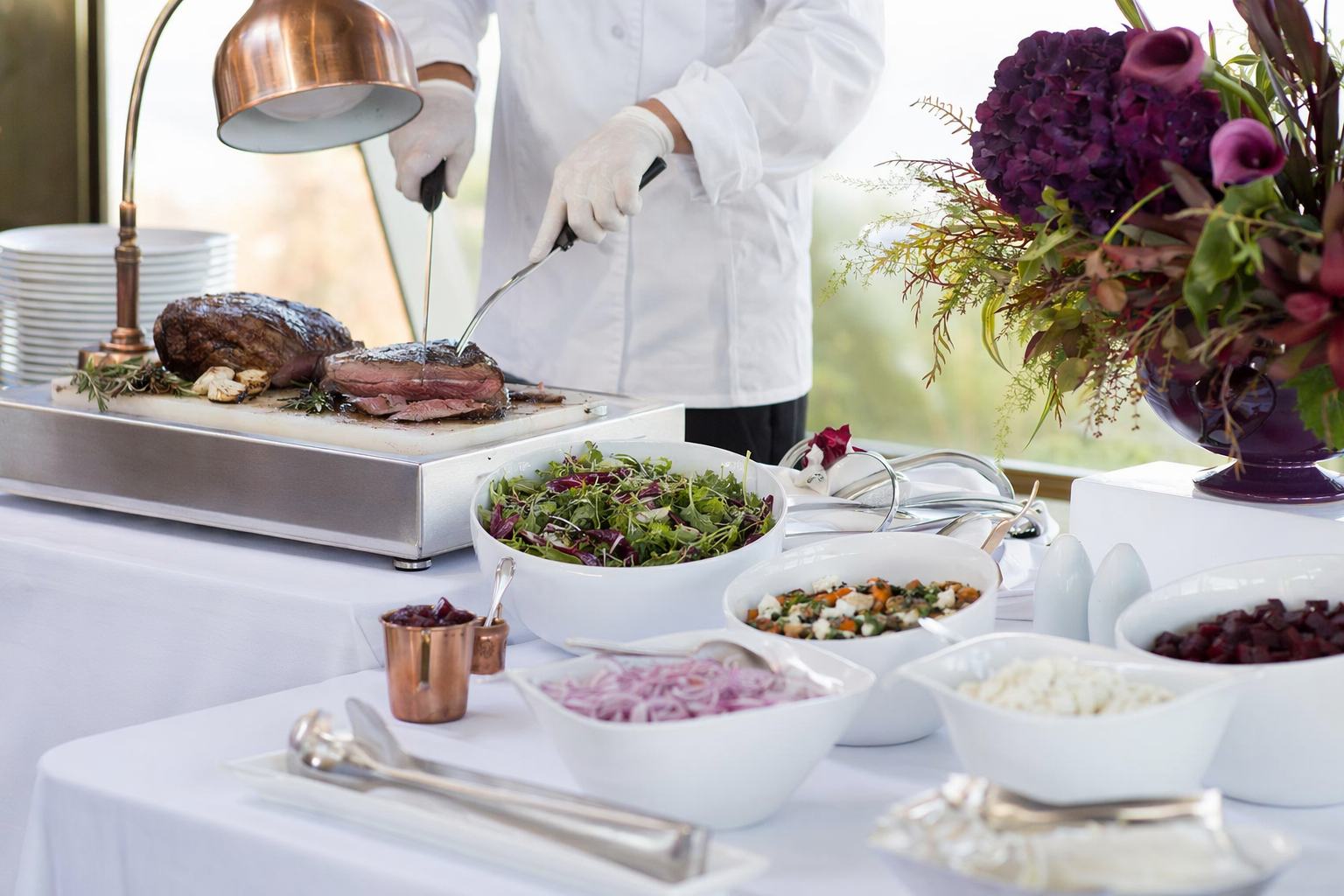
Quick answer: how buffet and plated differ
Buffet catering is typically set up as stations or a line where guests choose their food. You’ll often see people serving themselves (or having servers offer items), and the event usually moves at a casual pace.
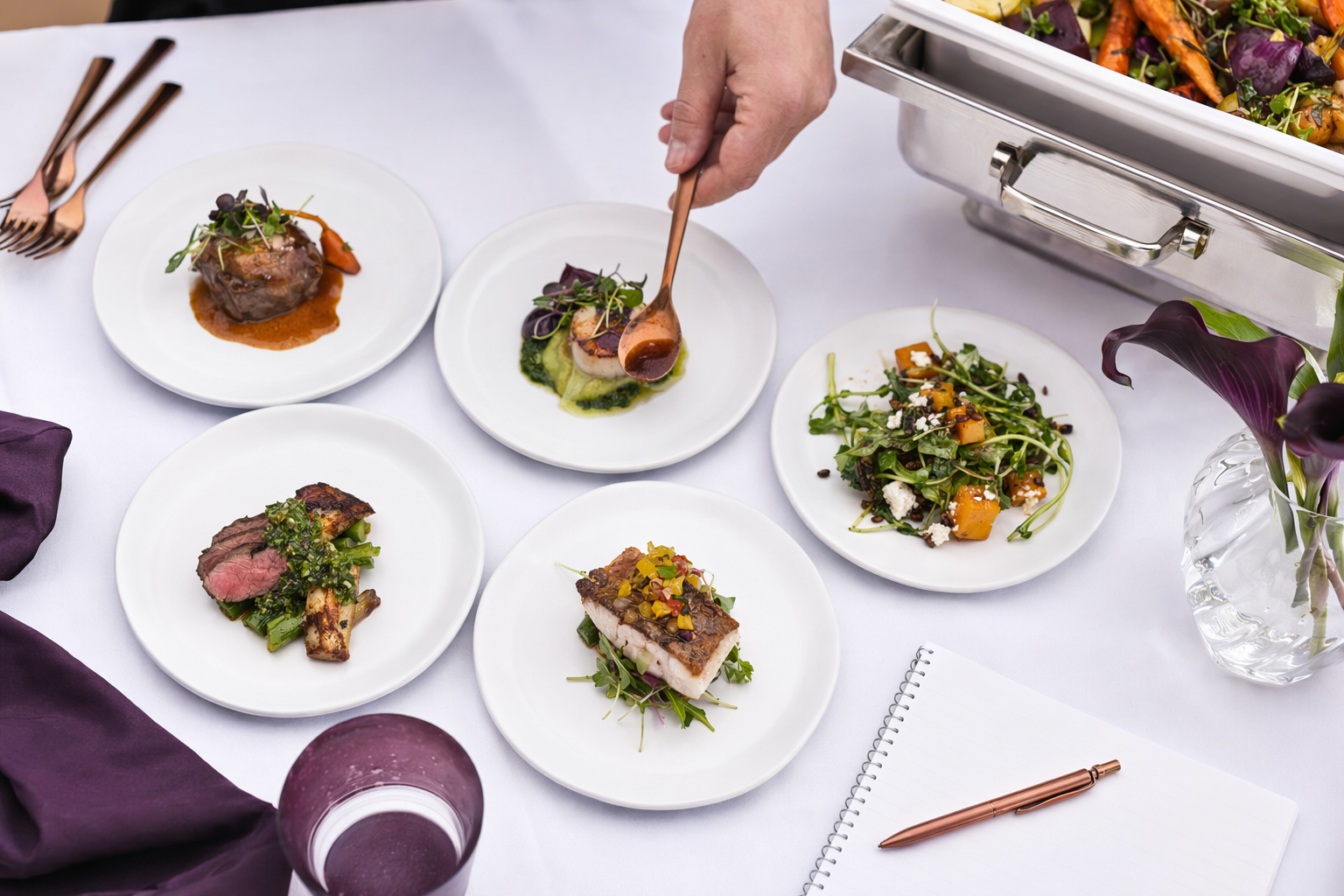
Plated catering is served to guests at their seats. A staff team brings courses (often appetizer/entrée/dessert) and timing is more controlled, which can feel more formal and “even” across the room.
Either style can work for weddings, office events, birthdays, memorial receptions, and cultural or holiday gatherings. The best choice usually comes down to guest flow, how formal you want the meal to feel, and how your budget handles staffing.
- Buffet = guests choose what they want (more variety, faster setup/turn).
- Plated = staff serves each table (more formal, often a smoother schedule).
What buffet feels like (and what it usually includes)
With buffet, you’re planning the “food experience” more than the “service experience.” Many hosts like it because it supports diverse tastes—especially for mixed diets and big guest lists—since guests can pick portions that fit them.
A typical buffet setup may include hot food stations, salads or sides, dinner rolls, and one or two entrée options (sometimes more). Many caterers also offer carving or chef-attended stations. You’ll usually see servers handling restocking and keeping everything fresh, even if guests serve themselves.
For timing, buffet often gives you flexibility. If you expect late arrivals or lots of conversation before dinner, buffet can be easier to manage. On the other hand, if the event is very large or the room is tight, the buffet line can slow things down—so it’s worth asking about line flow and staffing.
- Good fit when: you want a relaxed vibe, lots of choice, or flexible arrival times.
- Ask about: how many entrées, how stations are arranged, and who refills food during the meal.
What plated catering feels like (and what it usually includes)
Plated service feels more structured because you’re running the meal like a dining room. Typically, staff serves appetizers (if you choose), then entrées, and sometimes dessert. That structure can make the event feel “special,” especially for weddings and formal corporate dinners.
Plated events often require more planning before dinner—like entrée selections or dietary accommodations—so caterers can serve meals correctly. Some caterers can do a “one entrée plus sides” plated style, while others offer limited entrée choices.
The main tradeoff is staffing and timing. Plated catering usually needs enough servers to keep courses moving at a steady pace; otherwise, guests at different tables can feel out of sync. If you want a plated meal but also expect a busy schedule (speeches, performances, kids arriving at different times), ask how they build the serving timeline.
- Good fit when: you want a more formal, even experience table-to-table.
- Ask about: serving timeline, how many entrée choices, and allergy/diet handling process.
Cost basics: real per-guest ranges (what moves the price)
In the U.S., buffet and plated catering usually land in different price bands—not because one is “always cheaper,” but because staffing, service time, and food handling can be different. As a rough planning range, many hosts see:
- Buffet: about $25–$75+ per guest for food only in some markets, then higher when you add service staff, rentals, delivery/setup, and staffing.
- Plated: about $35–$120+ per guest when you include typical service, because plated meal service can require more staff time and more coordination.
These are not quotes. Your all-in cost depends heavily on menu and service style.
What drives price up or down:
1. Menu complexity (number of entrées, proteins, seafood, premium ingredients)
2. Dietary needs and substitutions (allergy-aware meals, halal/kosher handling, gluten-free and vegan options)
3. Guest count and service level (more guests can reduce per-guest cost for some items, but may require more staff)
4. Day/season and city (weekends, holidays, and peak seasons often cost more)
5. Service style details (stations vs. full plated courses; number of servers; bartender fees if alcohol is included)
6. What’s included (delivery/setup, linens, chafers/heat equipment, servingware, staffing, rentals)
Fine print you’ll want to confirm (in writing):
- Per-guest price and any food-and-beverage minimum
- Service charge/gratuity and whether it’s required
- Delivery and setup fees, and who breaks down afterward
- Bartender fees (if serving alcohol), plus any licensing requirements handled by the caterer/venue
- Rentals (tables, chairs, linens, plates/flatware) if needed
- Cake-cutting fees and corkage (if you bring outside items)
- Overtime rates if the event runs long
- Deposit amount, cancellation terms, and when the final headcount deadline is
Before you compare options, try to compare “all-in cost per guest,” not just the food number.
- Plated often costs more due to staffing and service time.
- Buffet can look cheaper, but line restocking, extra stations, and rentals can raise the all-in total.
What to ask caterers (so you don’t get surprised)
When you’re comparing buffet vs. plated, the most helpful questions are the ones that clarify what’s truly included and how smooth service will feel for your guest list.
Use this checklist while requesting quotes (or verifying details after you get matched):
- Exactly what is included in the per-guest price (food only vs. full setup, staffing, and rentals)
- How many entrées are offered, and whether guests pre-select or choose at the event
- For dietary needs: how substitutions work and how the caterer prevents cross-contact for allergies
- Staffing model: how many servers for your headcount, and what they do during the meal
- Timeline: when food is served, how long the meal is expected to take, and what happens if you run behind
- Rentals: which items they provide (if any) and any extra delivery/setup fees
- Beverages: if alcohol is planned, ask about bartender fees, serving hours, and any minimums
- Service charge/gratuity: confirm the exact amount or percentage shown on the invoice
- Deposits and deadlines: deposit due date, final headcount deadline, and cancellation policy
Red flags to watch for:
- A price that doesn’t clearly separate food vs. service vs. rentals
- Vague staffing (“we’ll have someone there”) without a count for your guest number
- No clarity on dietary handling for allergies (you want a process, not a hope)
- A final invoice that adds large fees you didn’t see in the estimate—if you can’t find the line items, ask for them before you agree
- Compare apples-to-apples: all-in cost per guest and what’s included.
How to choose for your event (quick decision guide)
If you want an easy way to decide, start with your event pace and your guest mix.
Choose buffet if:
- Your guest list is big and varied, and you want more choice without complicated ordering
- You expect mingling before dinner, and you want a meal that flexes with timing
- You’re including more family-style sides, international flavors, or multiple stations
Choose plated if:
- You want a more formal feel and everyone seated at the same time
- You have a clear schedule with speeches/entertainment and you want the meal to run smoothly
- You prefer a “table service” experience, especially for weddings or corporate galas
A practical tip for budget anxiety: think about what matters most to your table.
- If the vibe matters most, you may spend more on plated service for the experience.
- If food variety matters most, you may spend more on extra buffet stations or premium entrées.
If you’re still deciding, Tablefare can help you compare nearby options for your date, guest count, and service style—at no cost to you. Start with your details here: get matched free. Then use the cost planning guide: catering costs to sanity-check any numbers you see.
- Your best fit is about flow + vibe + budget, not just “buffet vs plated.”
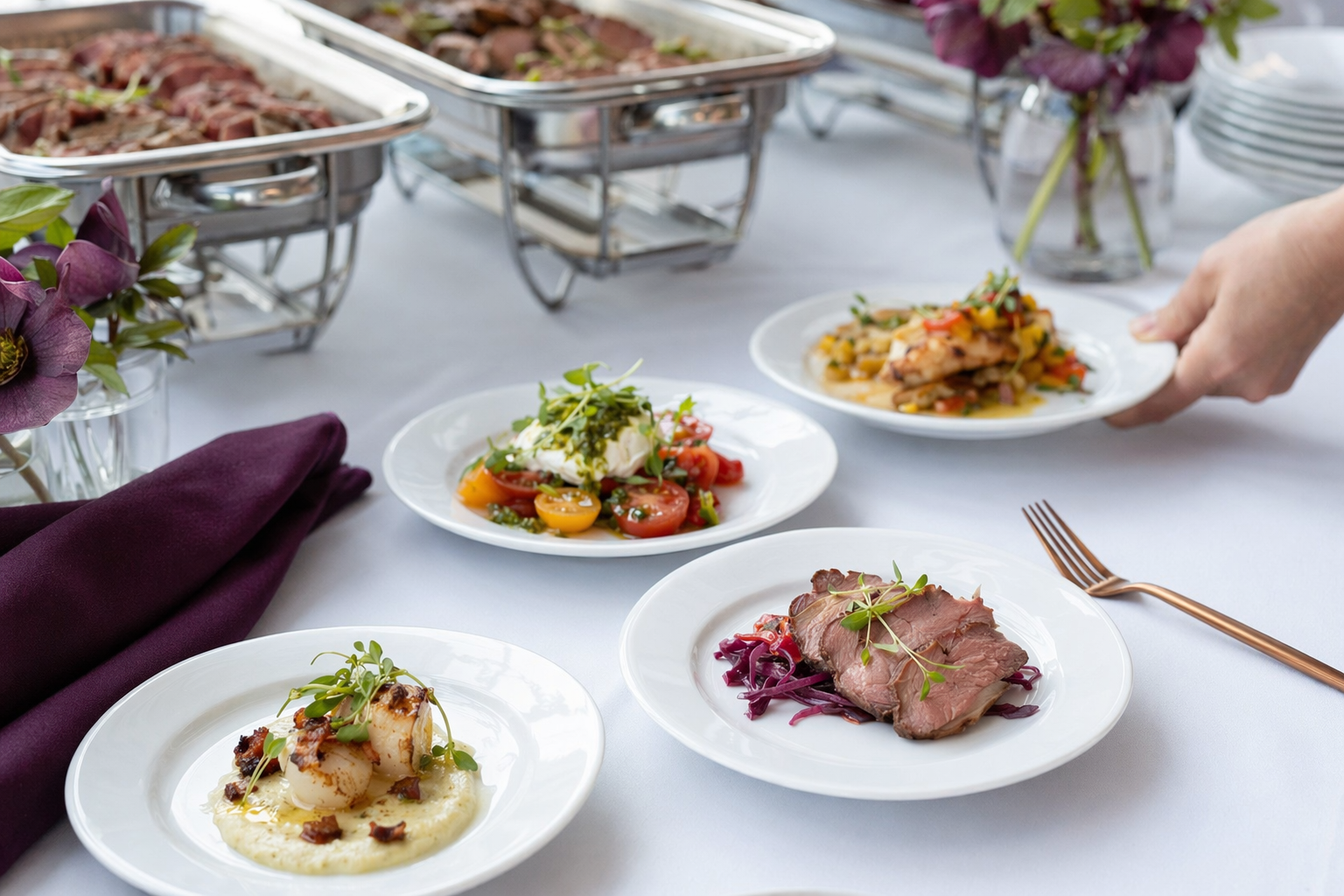
Buffet is self-serve and flexible (often lower in cost but staffing/rentals add up), while plated is table service and more formal (often higher due to staffing and timing), so compare all-in cost per guest and confirm every invoice line item.
Common questions
Does buffet mean guests pay less (or get less food)?
Not necessarily. Buffet can be less expensive in some cases, but the all-in cost depends on how many stations/entrées you include, staffing for replenishing and cleanup, and any rentals or delivery fees. Always compare the final invoice line items.
Which style is better for dietary restrictions and allergies?
Both can work, but the process matters. Plated can be easier if you collect entrée selections in advance, while buffet may be easier when the caterer labels items clearly and uses a strong cross-contact prevention plan. Ask exactly how they handle allergies and substitutions.
Will a plated dinner be slower than buffet?
It can be, but not always. Plated service depends on staff levels, course timing, and how many entrée choices you offer. Ask the caterer to explain their serving timeline for your guest count and schedule.
What “hidden” fees should I look for in catering contracts?
Common ones include service charge/gratuity, delivery/setup, rentals, bartender fees, overtime, cake-cutting, corkage, final headcount deadlines, and minimums (food and/or beverage). Confirm the exact numbers in writing before paying a deposit.
Can I switch from buffet to plated later if my guest count changes?
Sometimes, but it depends on your contract and the caterer’s planning lead time. The cost can change if staffing or menu quantities change, so confirm your options with the caterer and review the cancellation and revision terms.