How we've helped
We fed 150 wedding guests without blowing the budget
This is an anonymized, illustrative example of how one host planned food for 150 wedding guests—using Tablefare to compare catering quotes and pick a team that fit their guest list, cuisine, and budget.
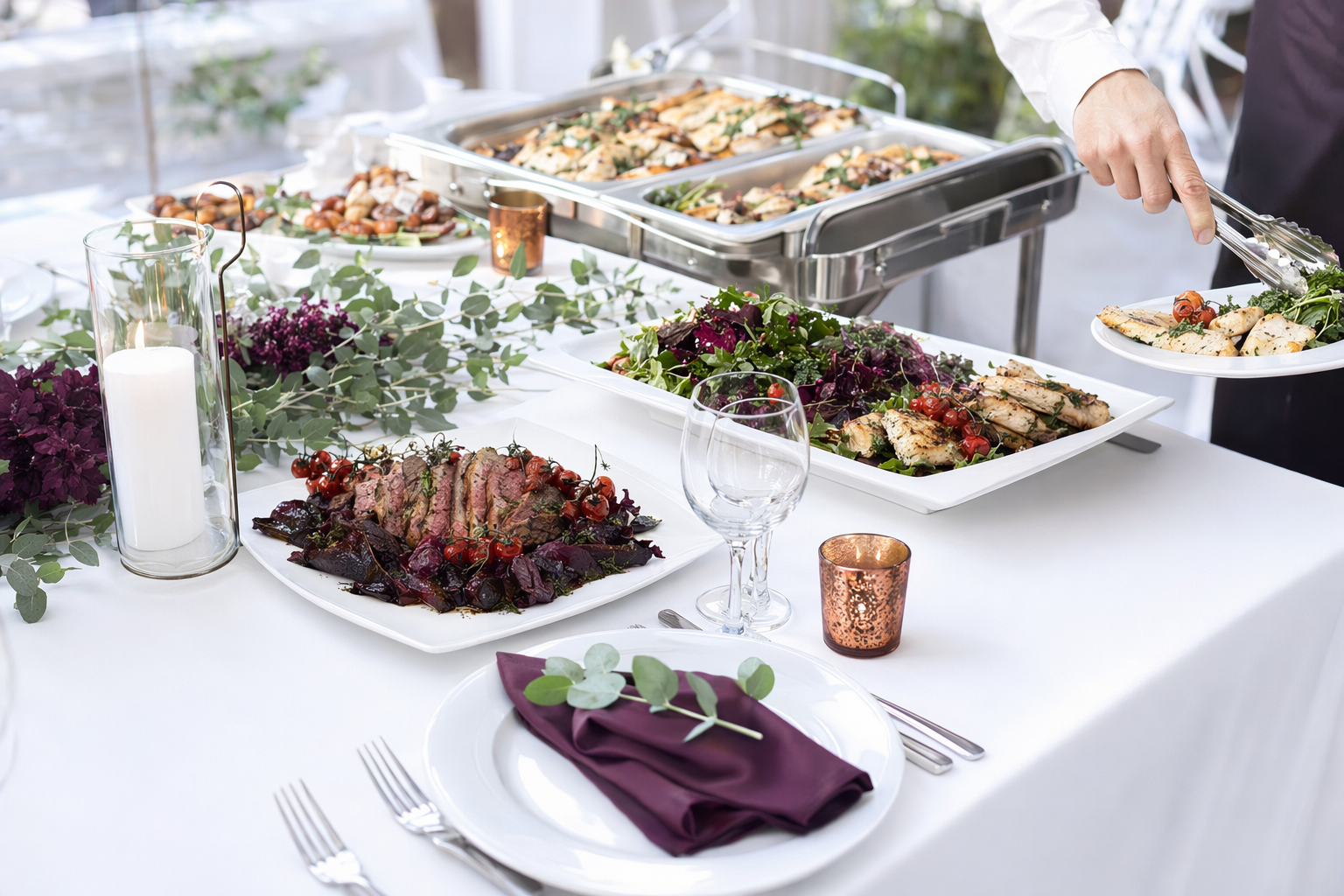
An illustrative example: planning the wedding table for 150
This story is 100% illustrative—no real person or business is being named. It’s just one example of how a host can move from “we have a date and a vision” to “we booked catering with confidence.”
Our host imagined a wedding that felt warm and generous, not overly formal: everyone should be able to eat what they came for (family-style favorites), with clear service so the night stayed calm. They had a rough guest count around 150, a preferred cuisine, and a budget they were nervous about—especially after hearing how catering costs can add up fast.
They weren’t looking for a restaurant. They wanted a caterer to run the event details at the right service level: food ready on time, staff who knew how to serve a large room, and a plan for dietary needs.
Before they compared options, they reminded themselves of the budgeting basics: the “per-guest” number is only the start. The all-in total can change based on what’s included (staffing, rentals, delivery, setup), and whether there’s a service charge/gratuity, bartender fees, overtime, and any minimums.
To see the typical process, start with how Tablefare works.
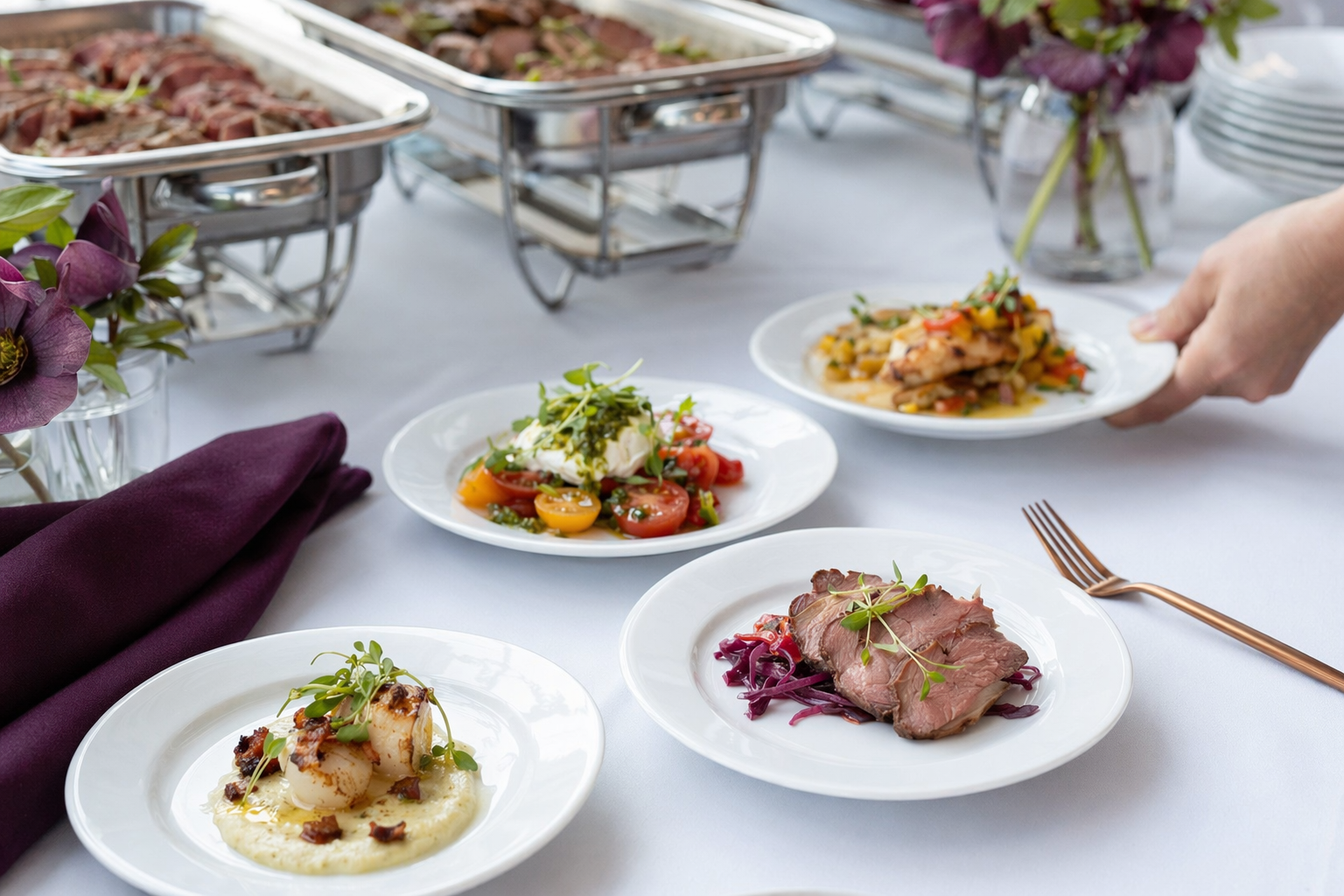
1) They built a clear picture for their event (so quotes could actually compare)
To get useful comparisons, the host focused on the details that affect cost and logistics—not just the food they wanted.
They decided on a service style (the table would be full-service rather than self-serve) and they made sure their guest list needs were real on paper:
- Guest count: ~150 (with a realistic expectation that the final headcount could shift)
- Food style: family-style/served portions (not buffet-only)
- Dietary needs: at least a plan for vegetarian and gluten-free, plus clear allergy awareness
- Experience goal: guests should get fed smoothly while the couple focuses on the ceremony and photos
They also thought about “what could surprise me later.” For example, some caterers include staffing in their per-guest price; others list it separately. Some include delivery and basic setup; others charge rentals, linens, or equipment.
Helpful rule of thumb: ask for the all-in cost per guest, not just the food. That usually helps you avoid unpleasant invoice math later.
If you’re starting from scratch, browse event ideas to match your vision to the right service approach.
2) They used Tablefare to get matched (free) with nearby caterers
Once they had a rough plan, the host used Tablefare to share their contact info and event intent—nothing more. Tablefare is a FREE matching service, not a caterer and not an event planner, so they weren’t being asked to pay anything to get matched.
They entered only what matters for matching:
- Event type (wedding)
- City/ZIP area
- Rough date
- Rough guest count
- Service style (full-service)
- Cuisine preferences
- Preferred language for communication
After that, they were matched with catering options nearby that could handle a wedding size and the service approach they wanted.
Important: matching does not guarantee availability or pricing. The caterers still need to review their specific menu, staffing plan, and the final headcount before anything becomes “booked.”
3) They compared quotes like a shopper: all-in cost per guest, not just “headline” price
When the host received catering quotes, they treated each one like a checklist—because two caterers can both say “$X per guest” and still produce different totals.
Their comparison focused on the items that commonly move the price up or down:
- Menu choices (premium proteins, imported ingredients, seafood vs. chicken, etc.)
- Service style (plated vs. stations vs. family-style vs. drop-off)
- Staffing and service needs (number of servers, event lead time, coverage)
- Food-and-beverage minimums (sometimes you’ll hit a minimum even with your guest count)
- Delivery/setup and rentals (tables, chairs, linens, warmers, chafers, dishware)
- Gratuity/service charges (often shown as a separate line item)
- Bar/bartender fees, if alcohol is included
- Overtime, if the event runs late
- Deposit, final-headcount deadline, and cancellation terms
For wedding catering, cost ranges can vary a lot by city, season, and what’s included. As a general guide, many hosts find:
- Food-only or basic catering may land around $30–$70 per guest (varies widely)
- All-in full-service catering often lands around $60–$120+ per guest, depending on menu, staffing, and rentals
If your venue requires staffing, rentals, or has strict rules, those can push the all-in total higher—so it’s best to confirm “what’s included” line by line.
They also made one practical decision early: they asked questions that prevented back-and-forth later. For example, “Is delivery/setup included?” and “Is gratuity included or separate?” and “When is the final headcount due?”
4) They chose the caterer that fit their people and their budget
After comparing all-in totals, the host chose the caterer that matched the event they pictured—not just the lowest number.
What mattered most to them:
- Their guest count and service plan felt realistic for 150 guests
- The cuisine matched their vision and felt right for the mix of family and friends
- Dietary needs were planned clearly (not as a vague “we’ll try”)
- The quote explained the details they cared about: staffing coverage, setup/delivery, and the final invoice lines
They also stayed in control. Whenever possible, they asked about tasting or sample options (even a limited tasting helps). And before signing anything, they confirmed the price per guest and the event date in writing.
No two contracts are the same, so they read the full agreement and invoice terms—especially around deposits, cancellation, overtime, and the date of the final headcount. This wasn’t legal advice—just good planning.
Because the caterer they picked felt aligned with their guest list and all-in budget, the host walked into wedding week with fewer unknowns, and the food plan stayed on track.
If you want to see where your own event fits in the planning timeline, check get matched and how it works.
In this illustrated example, a host used Tablefare to get matched for a 150-guest wedding, compared all-in catering costs line by line, and chose a caterer that fit their menu, service style, and budget.
Common questions
What’s the best way to compare catering quotes for an event with a guest count around 150?
Compare the all-in cost per guest and the line items behind it—food-and-beverage minimums, staffing/service charges, delivery/setup, rentals, and any bartender or overtime fees. Also confirm the final headcount deadline and what changes if guest numbers go up or down.
Is Tablefare a catering service or event planner that sets the prices?
No. Tablefare is a FREE matching service. We don’t cook, serve, or set catering prices, and we don’t control what a caterer quotes in their contract.
How much does full-service wedding catering usually cost per guest?
It varies by city, season, menu, guest count, and what’s included (staffing, rentals, delivery, gratuity/service charges, and minimums). A common general range is about $30–$70 per guest for more basic offerings, and $60–$120+ per guest for all-in full-service, but you should confirm the exact all-in total with caterers for your event.
Will the host get charged for using Tablefare?
No. Tablefare is free for the host. Caterers may pay a flat fee to participate, but the host doesn’t pay anything to get matched.