How we've helped
How we found reliable office lunch catering
Here’s an anonymized, illustrative example of how an office host planned a lunch, got matched for free, compared catering options, and chose a caterer that fit their guest list, cuisine, and budget.
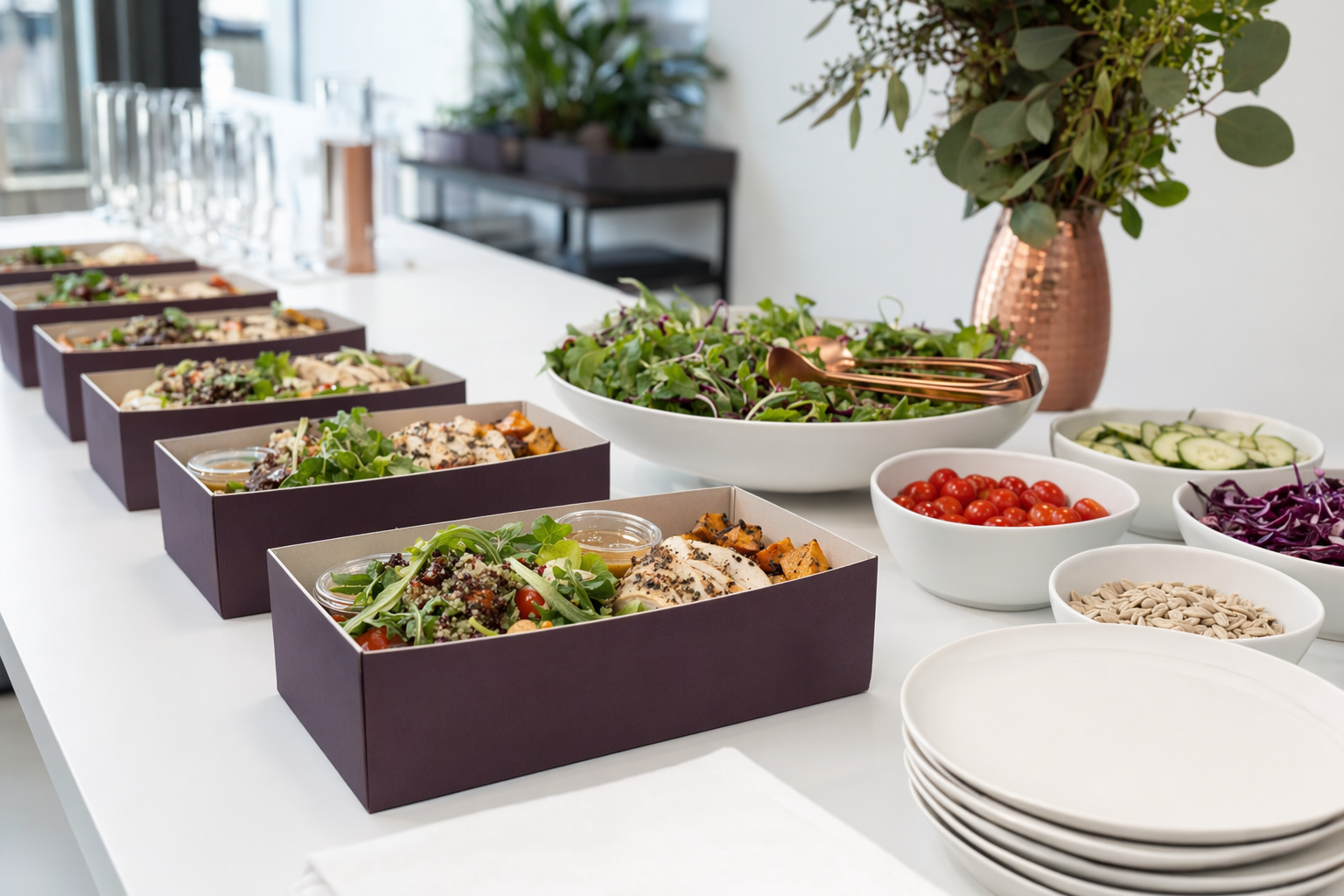
A real-looking plan—before any quotes
This is an anonymized, illustrative story (not a specific person). But it’s very similar to what many hosts go through when they’re planning office lunch catering on a rough date with a growing guest list.
In our example, the host pictured a reliable, on-time lunch for their team—friendly service, easy setup, and food that wouldn’t break the budget. They knew their office had a mix of tastes (comfort food + something lighter) and they needed clear options for common dietary needs.
They also had one big fear: “I don’t want to compare apples to oranges.” So they made sure their event notes included the basics—event type (office lunch), approximate headcount, a service style (drop-off or stations), and the cuisines they were considering—then they double-checked what “included” actually meant.
If you’re still shaping your plan, start with how it works and keep your requirements simple and specific. It will help you get comparisons that feel fair.
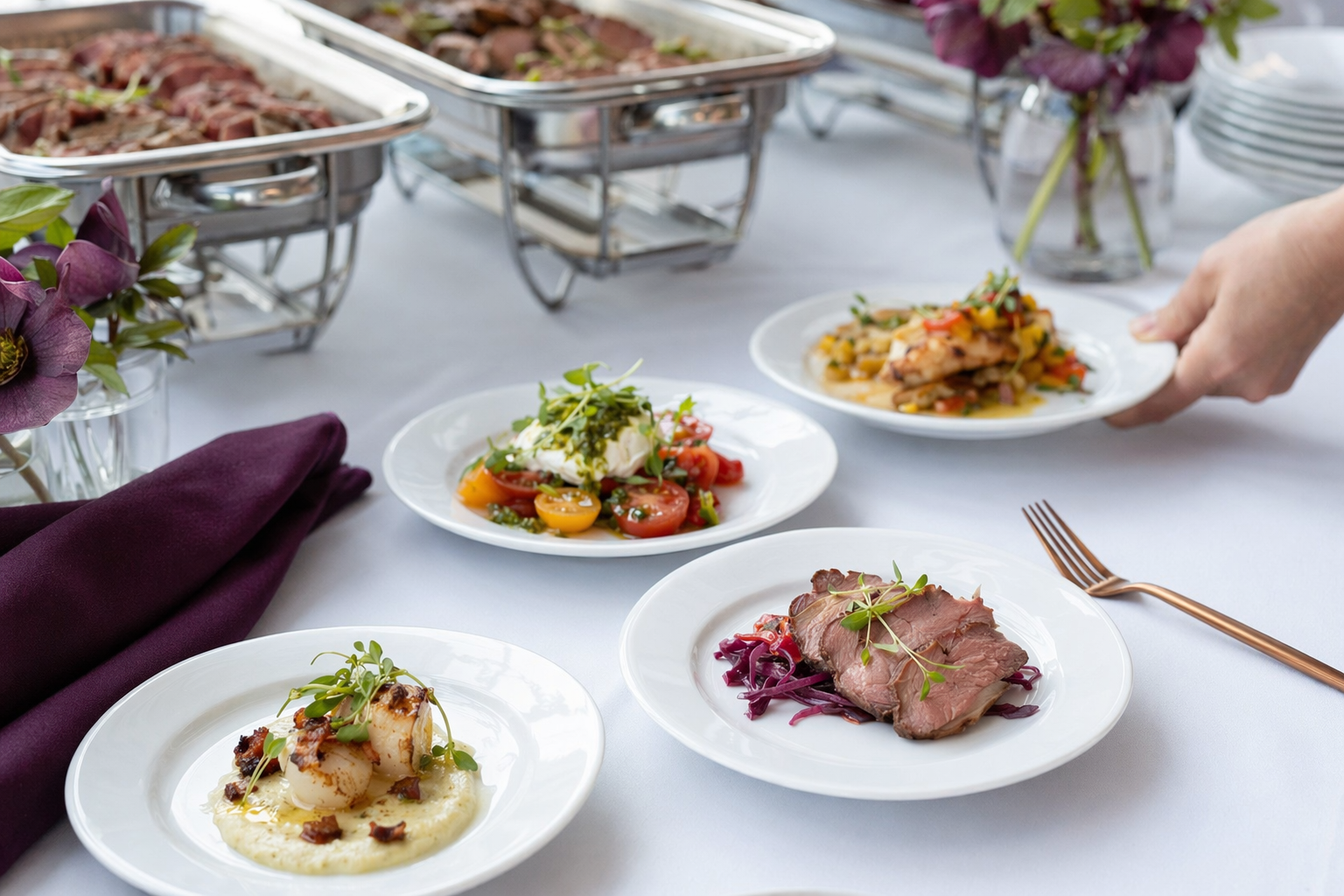
Getting matched for free (and staying in control)
The host used Tablefare to request matches with caterers near their office. Tablefare is a FREE matching service—NOT a caterer, restaurant, or event planner—so the caterers do the quoting and the host chooses who works with them.
To get matched, the host shared contact + event intent only: event type, city/ZIP, rough date, rough guest count, preferred service style, cuisine ideas, and an optional preferred language. That’s it. No sensitive documents, no financial accounts, no “mystery forms.”
Soon after, they received multiple catering options to compare. The goal wasn’t to “pick the first price.” It was to line up menus and service details so they could understand the all-in cost per guest.
Tip: If your team’s headcount might change, plan for a “range” when you compare. Caterers often quote based on your final count and final deadlines matter.
Comparing quotes without getting surprised
When the host got catering quotes back, they compared the same things in every proposal. Per-guest pricing can be straightforward, but the “total” often changes based on what’s included.
Here’s what the host made sure to confirm in writing:
- Per-guest price (food-only vs. food + service)
- Minimums (food-and-beverage minimums may apply even for smaller lunches)
- Service charge / gratuity (if separate)
- Staffing fees (who sets up, serves, replenishes, and cleans)
- Delivery + setup (and how early they arrive)
- Rentals (chafers, tables, plates, napkins, utensils, linens)
- Barista/bartender fees (if beverages are included)
- Overtime rules (especially for longer lunch windows)
- Deposits and final-headcount deadlines
- Cancellation policies
They also asked a simple question that saves money: “Is the price based on drop-off, or is it fully staffed?” In the example, moving from a basic drop-off to staffed service increased the all-in cost—but it also reduced the host’s day-of stress.
Cost ranges (not quotes) to expect for office lunches in the US commonly fall around:
- Drop-off lunches: roughly $15–$35 per person for food, sometimes more depending on cuisine and menu (with delivery/setup/rentals sometimes added)
- Food stations: roughly $25–$55 per person (often includes staffing and setup, but not always)
- Full-service with staff + rentals + warm holding: roughly $35–$75+ per person
What moves these numbers up or down? Menu complexity (lobster-style vs. simpler buffet), guest count, day/time and season, distance and delivery requirements, how much staffing is needed, and whether rentals are included. In other words: ranges are real, but a final invoice depends on your exact menu and service plan.
How they chose a caterer that fit the team and the budget
In the host’s comparison, two proposals looked “similar” at first. But one had more included (service tools, setup time, and clear coverage for dietary options), while the other looked cheaper until they added rentals and service staffing.
The winning choice in the illustrative story wasn’t necessarily the lowest per-guest number—it was the best match for the event picture:
- Their guest list needed allergy-aware options and clear ingredient handling for common dietary restrictions.
- They wanted a reliable delivery + setup plan so food would be fresh and on time.
- They preferred a service style that matched their office workflow (drop-off for simplicity, or stations with staff if they wanted replenishment).
- They kept an eye on the all-in cost per guest, not just the base food line.
Once they selected a caterer, the host confirmed details in writing: menu items, quantities, dietary labeling, delivery timing, who would handle setup, and the final-headcount deadline.
They also checked one more practical thing: whether the caterer could handle a small last-minute adjustment. For office lunches, that flexibility can matter as much as flavor.
What you can do next (a simple checklist)
If you want a calmer planning process for office lunch catering, this is a good way to move from “idea” to “apples-to-apples comparisons.”
1. Start with your event basics
- Event type (office lunch)
- City/ZIP
- Rough date and time window
- Rough guest count (and whether it might change)
- Service style (drop-off, food stations, or plated—if applicable)
2. Pick the vibe + cuisine
- 1–3 cuisine directions (keep it specific)
- Include dietary needs (halal, vegetarian, vegan, gluten-free, allergy-aware)
3. Compare quotes the same way
- All-in cost per guest (food + service + rentals + delivery/setup)
- Minimums, gratuity/service charge, staffing, and delivery rules
- Final-headcount deadline and cancellation terms
4. Confirm in writing before paying a deposit
- Ask for the per-guest price and what’s included on the invoice
- Read the full contract and final invoice before signing or depositing
For step-by-step guidance, you can also explore get matched and browse example event setups in events.
- Tablefare is free for you. Caterers quote and you choose—so you stay in control.
In this illustrative example, a host described their office lunch needs, got free matches, compared all-in per-guest quotes, and picked the caterer that best fit their guest list, cuisine, and budget.
Common questions
Is Tablefare the company that provides the food for office lunches?
No. Tablefare is a FREE matching service that helps you connect with caterers who can quote your event. Caterers (not Tablefare) prepare the food, provide the staffing (if included), and issue the contract and invoice.
What should I compare in catering quotes so I don’t overpay?
Compare the all-in cost per guest, and confirm what’s included: food-and-beverage minimums, service charge/gratuity, staffing, rentals, delivery + setup, and any deadlines for the final headcount. Always request the final invoice details in writing and read the contract before paying a deposit.
What’s a realistic per-person budget for office lunch catering?
In the US, many hosts see roughly $15–$35 per person for drop-off food, $25–$55 for food stations, and $35–$75+ for full-service options—depending on menu, guest count, day/season, and what’s included. These are cost ranges, not quotes, and your final price depends on your exact setup.
Can catering handle last-minute changes to the guest count?
Sometimes, but it depends on the caterer’s policies and the final-headcount deadline listed in their contract. Ask before you confirm—small changes are often easier than large shifts after production planning has started.