Service styles
Food station and buffet catering
Food stations and buffets can feed a room generously without the formality of plated service. They work for weddings, office events, birthdays, holiday parties, and cultural gatherings — and the final price depends on the menu, staffing, rentals, and what is actually included.
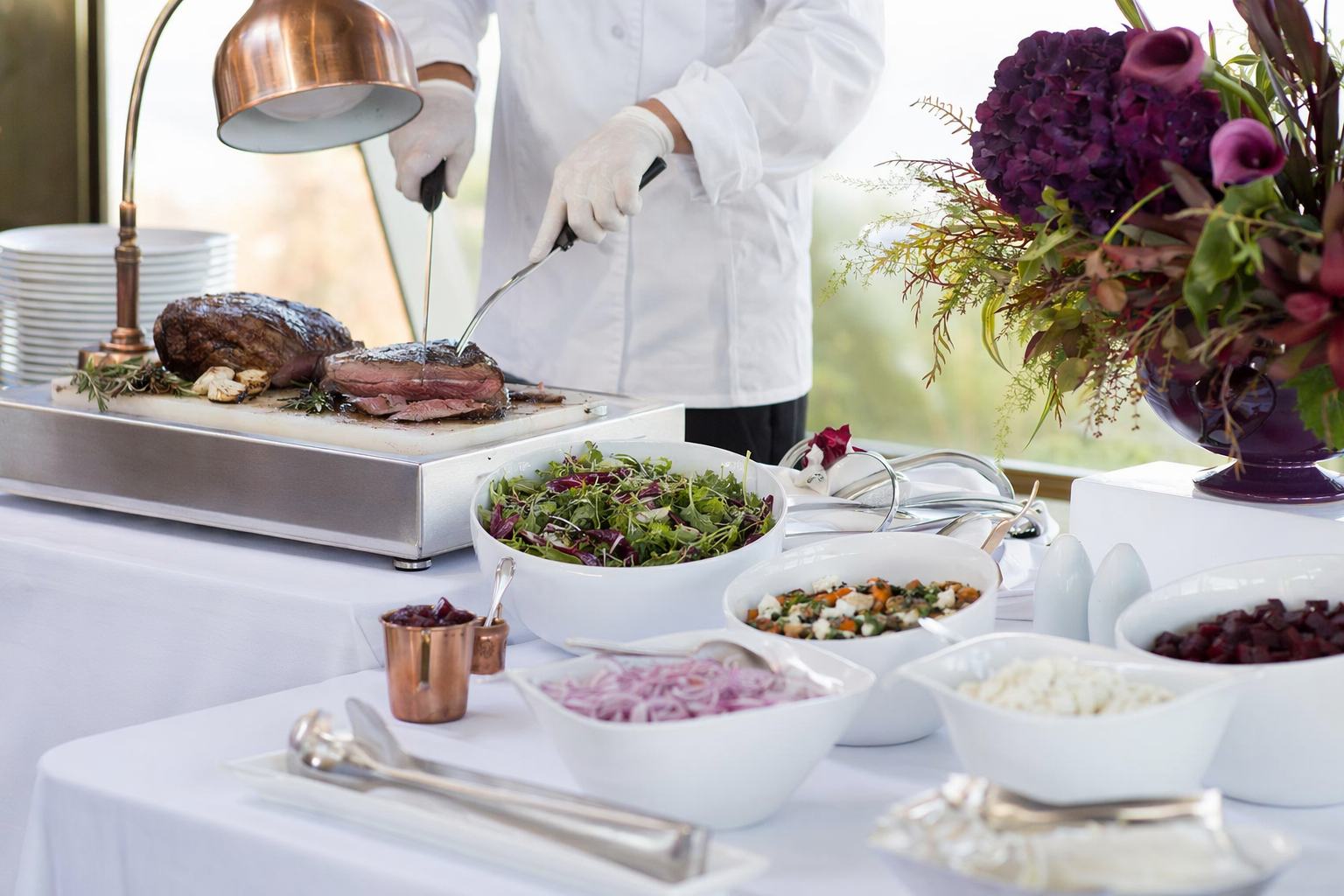
Why hosts choose food stations and buffets
If you want guests to have choices, move around, and serve themselves at a comfortable pace, this style can be a very good fit. Think taco bars, pasta stations, carving stations, mezze spreads, rice-and-protein buffets, breakfast buffets, barbecue lines, grazing tables, or a mix of cuisines that lets different generations and diets all find something they enjoy.
Buffets are usually the simpler version: one or two lines, shared menu, guests serve themselves or are lightly assisted. Food stations are more interactive: separate setups around the room, sometimes with attendants portioning or finishing food. Stations can feel lively and social, but they often cost more than a basic buffet because they may need extra staff, more equipment, and more setup.
This style works well when your guest list has varied tastes, you want flexibility with dietary needs, or you are feeding a larger group and want service to feel relaxed rather than formal. It can also be a smart middle ground between simple drop-off and staffed catering options and a fully plated meal.
- Good for mixed age groups and varied tastes
- Often easier to offer vegetarian, vegan, halal, kosher-style, gluten-free, or allergy-aware options
- Can feel festive and abundant without requiring a plated-service timeline
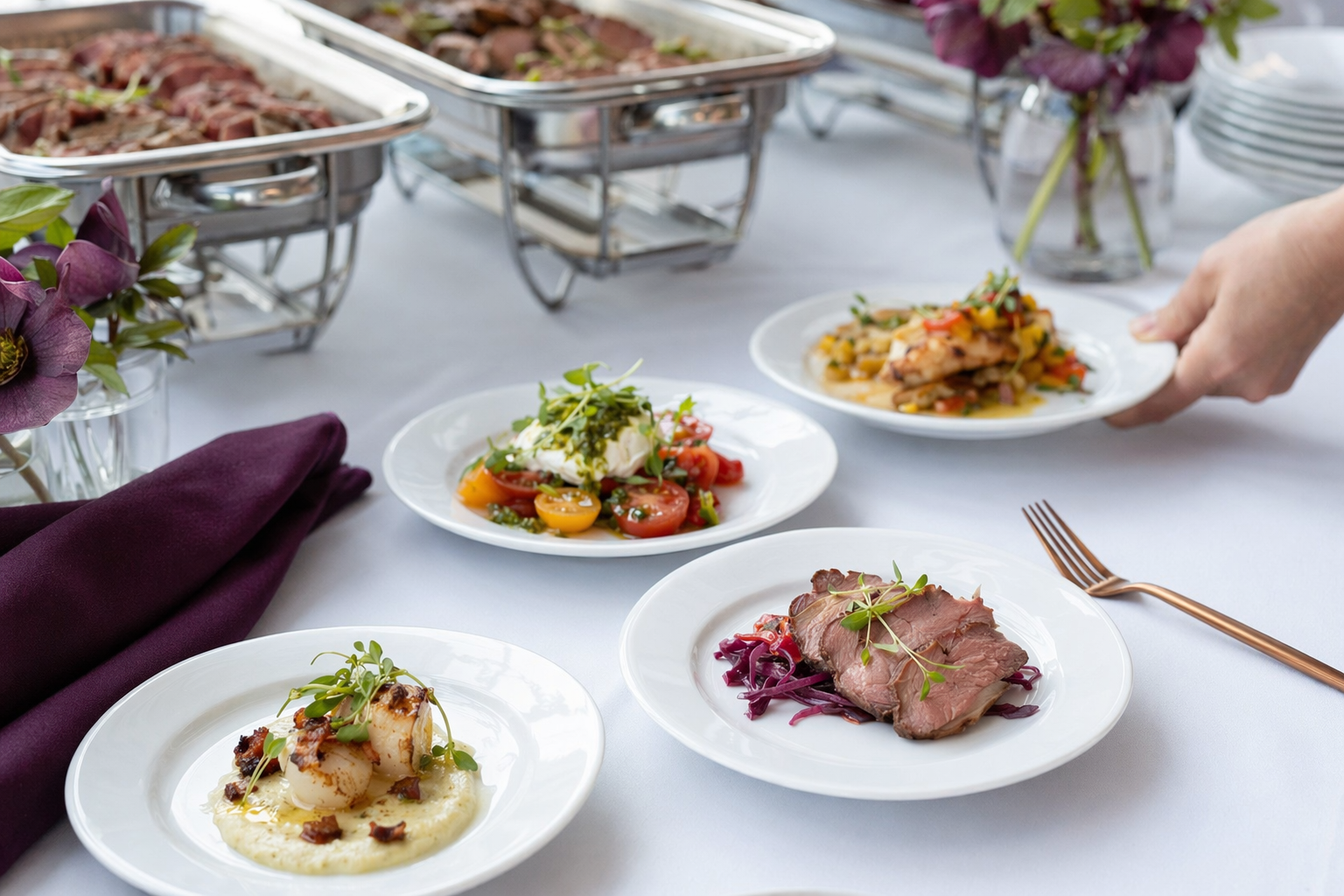
What to picture at your event
A buffet usually means one long table or two mirrored lines with salads, sides, mains, breads, sauces, dessert, and drinks or coffee nearby. Guests are called by table or invited to line up when ready. For a smooth flow, caterers may recommend two-sided buffets, duplicate stations, or attendants helping with portions so the line keeps moving.
Food stations spread guests around the room. You might have a carving station in one corner, tacos or noodles in another, a vegetarian station, and a dessert or coffee station later in the evening. This can reduce long lines and create energy in the room, but the room layout matters. You need space for tables, equipment, traffic flow, and safe hot-holding.
If your event includes older relatives, guests with mobility concerns, or a tight venue, ask whether a buffet attendant or some passed plates during cocktail hour would make things easier. For workplace events or shorter gatherings, a simple buffet may keep things moving better than multiple stations.
- Ask how many buffet lines or stations are recommended for your guest count
- Confirm whether food is self-serve, attendant-served, or a mix
- Check table space, power access, and venue rules before choosing interactive stations
What food station and buffet catering usually costs
Honest range: a simple staffed buffet often lands around $18-$45 per guest for food only, while a fuller buffet with better ingredients, more sides, desserts, or wider menu choice may be closer to $35-$70 per guest. Food stations often start higher, commonly around $30-$75 per guest, and can go to $75-$150+ per guest when you add chef-attended carving, seafood, premium meats, late-night stations, specialty desserts, or upscale presentation. These are general ranges, not quotes.
Your real all-in number depends on the menu, service style, guest count, day and season, your city, and what is included. A weekday office lunch for 40 guests may price very differently from a Saturday wedding for 180. Smaller guest counts can cost more per person because staffing, transportation, rentals, and setup still have to be covered. Premium proteins, imported ingredients, live cooking, and custom decor also push the per-guest cost up.
What many hosts miss is that the menu price is not always the final price. Ask about staffing, buffet attendants, chefs for action stations, bartenders, delivery, setup, breakdown, rentals, plates, flatware, chafers, fuel, linens, beverage service, cake-cutting, corkage, overtime, deposit terms, final-headcount deadline, cancellation terms, and any food-and-beverage minimum. Compare the all-in cost per guest, not just the menu price. More cost guidance can help on our catering costs page.
- Simple buffet food only: often about $18-$45 per guest
- Fuller buffet: often about $35-$70 per guest
- Food stations: often about $30-$75+, with premium events reaching $75-$150+ per guest
Questions to ask before you book
Before you choose a caterer, ask exactly what guests will receive and how the food will be served. Two buffet quotes can look similar but include very different things. One may include plates, utensils, serving equipment, setup, cleanup, and attendants; another may only cover food in pans with basic setup.
Ask practical questions in plain language. How much food is planned per person? Will there be enough for guests to try more than one station? How long will hot food stay out? Who refreshes trays, clears plates, and keeps the line moving? If you have dietary needs, ask whether dishes are clearly labeled and how cross-contact is handled. If faith-based requirements matter, ask the caterer to explain plainly how they source and prepare halal, kosher, vegetarian, vegan, and allergy-aware meals.
Most important: confirm the date and the price per guest in writing, and read the full contract and final invoice before paying a deposit or signing. Tablefare is a free matching service — not a caterer, restaurant, or event planner — so the caterer's own contract is what controls the details.
- What is included in the per-guest price?
- How many attendants or chefs are needed, and what do they cost?
- Are rentals, linens, chafers, and cleanup included?
- When is the final guest count due?
- What happens if the event runs late?
Fine print that matters with buffets and stations
This service style has a few common line items that surprise hosts. Buffets may need chafers, fuel, serving utensils, buffet decor, sneeze guards in some settings, extra tables, and staff to reset and monitor food. Stations may need specialty equipment, power, ventilation approval, or on-site chefs. If alcohol is part of the event, bartender fees, bar setup, ice, cups, mixers, and venue rules matter too.
Some venues have their own rules about outside food, kitchen access, trash removal, insurance documents, or how long food may remain out. Some caterers include disposable serviceware for casual events but charge extra for china, glassware, and upgraded linens. Grazing tables and open displays can also have time limits for food safety. Rules vary by area and venue, so ask early.
This is general information only, not legal or financial advice. For contract terms, venue rules, alcohol service, permits, taxes, or cancellation questions, rely on the caterer's written agreement, your venue's policies, and licensed professionals when needed.
- Attendant fees and chef fees can change the total quickly
- Rentals and setup tables are often separate from food pricing
- Venue rules can affect what kind of station setup is allowed
How Tablefare helps you compare options for free
If you are not sure whether you need a buffet, food stations, or something simpler, Tablefare can help you get matched with caterers near you who offer this style. Our service is free for the host. We do not cook, serve, or set catering prices, and we cannot promise a quote, a held date, or a booking.
You share basic event details only: your name, phone, optional email, event type, city or ZIP, rough date, rough guest count, service style, cuisine, and preferred language. Then you can compare responses, ask questions, and choose who you want serving your table. You stay in control of the tasting or sample process where available, the contract review, and the final decision.
If you are ready, you can get matched. If you are still narrowing down the kind of event you are planning, you can also browse event types or other catering services.
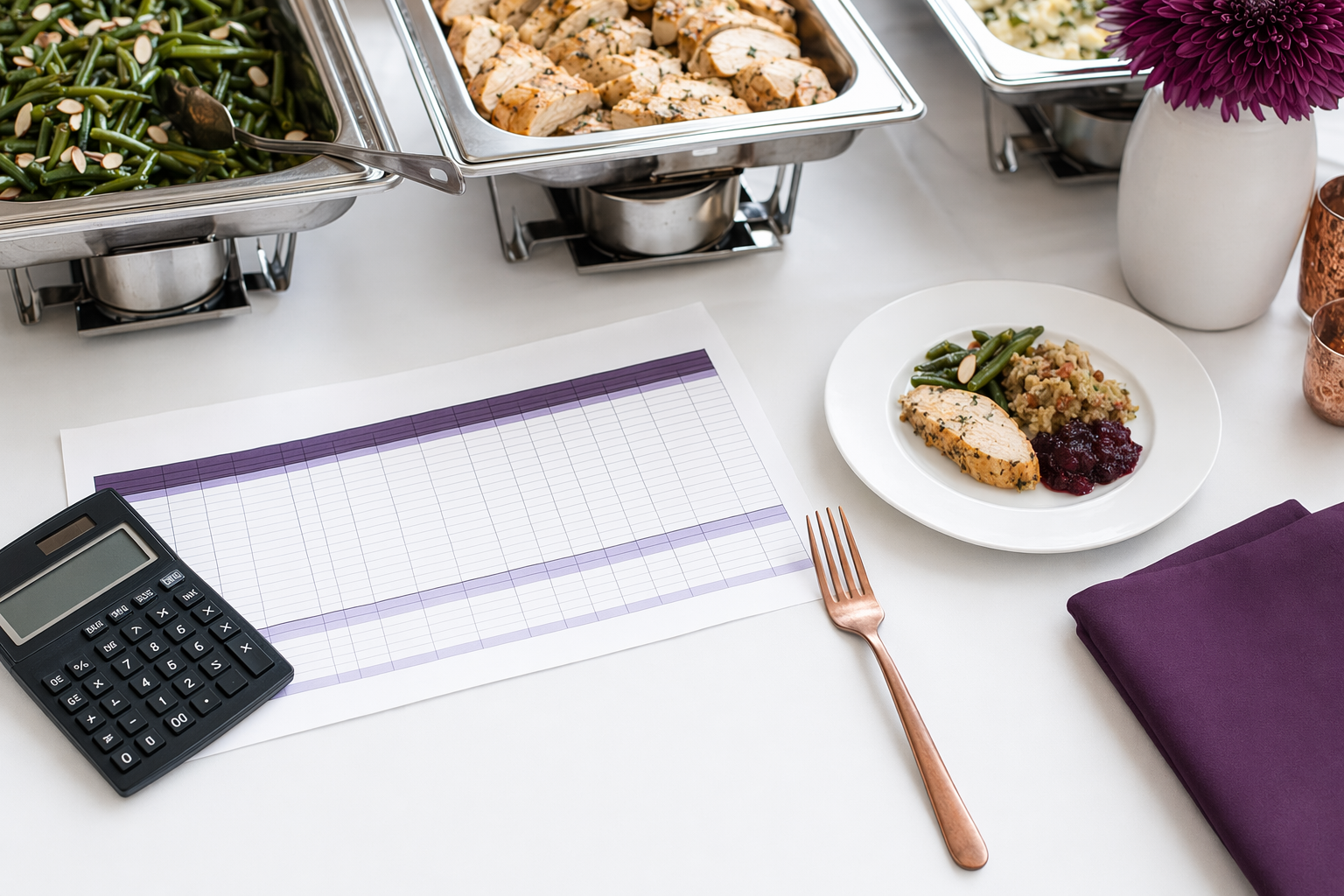
Buffets and food stations can be a flexible, crowd-friendly way to feed your guests, but the real cost depends on the menu, staffing, rentals, and what the caterer includes.
Common questions
Is a buffet cheaper than plated service?
Often, yes — but not always. A simple buffet can cost less per guest than plated service, but multiple stations, chef attendants, rentals, and staffing can bring the total up quickly.
How many stations do I need for my guest count?
It depends on your guest count, timing, venue layout, and menu. Ask each caterer how they would prevent long lines and whether they recommend duplicate stations or attendants.
Can buffets work for weddings and formal events?
Yes. A buffet or station setup can still feel elegant with the right menu, linens, signage, service staff, and room layout.
What should I compare between buffet quotes?
Compare the all-in cost per guest and what is included: food, staffing, rentals, delivery, setup, cleanup, tax-related charges where applicable, overtime, and any minimums. Confirm the date and the full price in writing before you pay a deposit or sign.
Does Tablefare book the caterer for me?
No. Tablefare is a free matching service, not a caterer or event planner. We help you connect with caterers near you, and you choose whether to move forward.