Free downloads
Catering Budget Worksheet
Plan your catering budget without guesswork. This free worksheet helps you calculate the true all-in cost per guest—so you can compare quotes fairly from caterers near you (Tablefare is a free matching service, not the caterer).
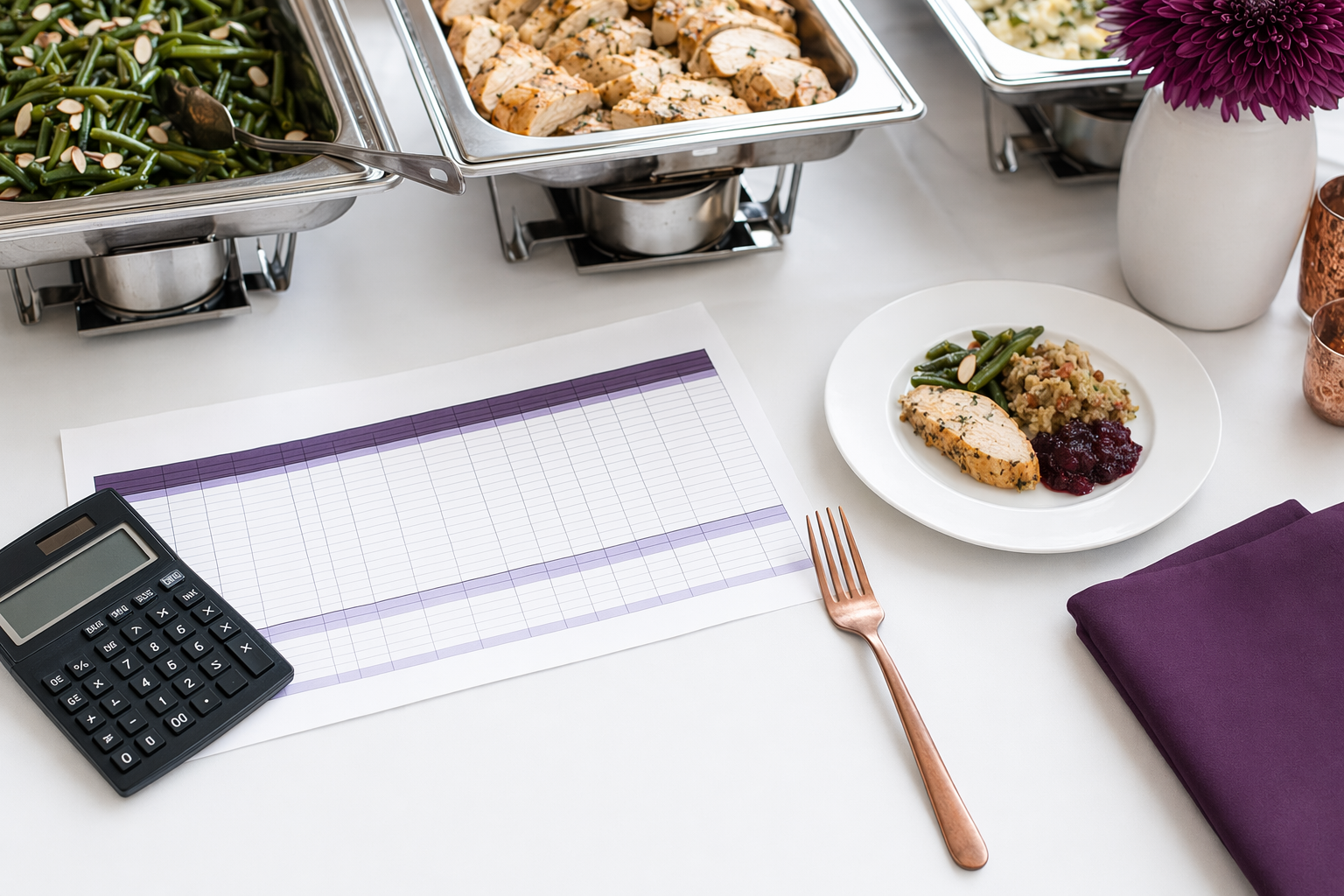
What’s in the Catering Budget Worksheet
This download is a simple, printable worksheet to help you compare caterers the same way—line by line—across food, service, staffing, rentals, and the “minimums” that can change your total.
You’ll have spaces to track your event basics (date, location/ZIP, guest count, and service style), then break the catering cost into the pieces that show up in real invoices.
Use it to total an estimate and write down the questions you need to ask each caterer before you pay a deposit or sign anything. Remember: the worksheet is for planning and comparing—it's general information, not a quote or guarantee.

Who this helps (especially if you’re budget-worried)
If you’re working with a rough guest list, a tight budget, and a caterer quote that feels confusing, this worksheet is made for you.
It’s also helpful if you’re planning from another city or country, hosting a multicultural or faith-based meal, or you read another language more comfortably than English—because it gives you a structured checklist to make sure no line item gets missed.
Whether you’re planning a 30-guest drop-off gathering or a large plated celebration, the worksheet helps you compare “apples to apples” and avoid surprises when the final invoice comes due.
How to use it when comparing caterer quotes
Start by filling in your best-known event details, then collect quotes from multiple nearby caterers and enter the numbers exactly as they appear.
Use these steps so the comparisons are fair:
- Write down your service style (drop-off, food stations, plated, buffet, or full-service).
- Record your guest count and any expected changes (and note the deadline for final headcount).
- Enter the caterer’s per-guest food price and any food-and-beverage minimum.
- Add the service charge/gratuity and any required staffing/bartender fees.
- List rentals (tables, chairs, linens, servingware, chafers), delivery/setup fees, and any overtime charges.
- Include special items like cake-cutting, corkage, utensils/plates, and taxes if shown separately.
- Total the “all-in estimated cost” for your guest count and calculate a comparable per-guest number.
If two caterers look different, go back to the sheet and compare what’s included: sometimes a lower per-guest food price ends up higher after staffing, rentals, and minimums are added.
To get more context on what usually drives costs up or down, you can review catering cost basics and the planning guides in guides.
- Tip: Always confirm the price per guest and the date in writing, and check the full contract and final invoice before paying a deposit.
Typical catering cost ranges (for planning, not promises)
Catering prices vary a lot by city, season, day of the week, menu choices, and the service style you want. The worksheet helps you organize those differences, but the totals will only be as accurate as the information in each caterer’s quote.
Here are general planning ranges for many events in the U.S. (final numbers depend on what’s included):
- Drop-off catering (food delivered, minimal/no setup): often roughly $15–$40+ per guest.
- Food stations or buffet (food + staff depending on the provider): often roughly $25–$65+ per guest.
- Plated or full-service (servers, more staffing, sometimes rentals): often roughly $45–$120+ per guest.
What commonly pushes the cost up or down:
- Menu and proteins: higher-end meats, seafood, and multi-course menus cost more.
- Service style: plated and full-service usually require more staffing and coordination.
- Guest count: some caterers have minimums, and per-guest pricing can change with headcount.
- Day and season: weekends, holidays, and peak seasons often cost more.
- What’s included: rentals, delivery/setup, cake-cutting, alcohol service, and cleanup can add significant line items.
The worksheet is where you translate those drivers into a fair comparison. If a quote includes a food-and-beverage minimum, enter it—because minimums can make a “low per-guest” offer more expensive for a smaller guest list.
Questions to write down on the worksheet before you decide
Use the worksheet to prepare your questions so every caterer answers the same key points. That’s how you avoid surprise charges.
Consider adding these questions to your notes:
- What exactly is included in the per-guest price (food only vs. food + rentals + service)?
- Is there a food-and-beverage minimum, and how is it calculated?
- What service charge/gratuity applies, and is it on top of the food price?
- What staffing is included (servers, attendants, bartenders), and for how many hours?
- Are rentals included (tables, chairs, linens, chafers/serving items), or are they separate?
- Are delivery, setup, and breakdown included? What’s the fee if not?
- What are the overtime rules and fees?
- What’s the deposit amount, the cancellation policy, and the final headcount deadline?
- For allergies or dietary needs (halal, kosher, vegan, gluten-free): how do they prevent cross-contact, and what accommodations are possible?
After you fill in what you learn, you can compare all-in costs across caterers with less stress.
If you’d like, you can also start the process with getting matched—Tablefare is a free matching service that collects contact and event intent only, then connects you with catering options near your city/ZIP to quote and compare at no cost to you.
A quick reminder about Tablefare (and what this download is)
This worksheet is a planning tool to help you compare caterer invoices fairly. Tablefare does not cook, serve, or set catering prices, and we’re not an event planner.
When you receive quotes, you’ll stay in control: you can taste/sample where possible, compare the all-in cost per guest, and choose the caterer who fits your food and service style.
Finally, always read the full contract and final invoice carefully. For anything legal or financial, rely on the caterer’s contract and licensed professionals in your area—this page is general information only.
Download the worksheet to break catering quotes into the real all-in costs—food, service, staffing, rentals, and minimums—so you can compare caterers fairly.
Common questions
Is the worksheet a quote or does it guarantee a price?
No. The worksheet is a planning and comparison tool. Your final cost depends on the caterer’s menu, service style, staffing, rentals, minimums, and your event details—so it’s not a guaranteed price.
What if my guest count isn’t final yet?
That’s normal. Enter your current estimate and note the final headcount deadline from each caterer’s contract. Minimums and per-guest pricing can change as your numbers move.
Do I need to calculate taxes and gratuity on the worksheet?
If the quote lists them separately, yes—include whatever line items the caterer provides so you can compare all-in totals. Gratuity/service charge and other fees are often where “low per-guest” quotes get higher.
Can this help me with dietary needs like halal, kosher, vegan, or gluten-free?
Yes. Use the worksheet’s notes section to track what accommodations are offered and what cross-contact prevention looks like. Always confirm details directly with the caterer, because options vary by kitchen and menu.
Is Tablefare charging me for this worksheet or for matching?
No. Tablefare is free for you. Participating caterers may pay a flat fee, but there’s never a fee for you to use the matching service.